(The experience of the sister of a person with disabilities)
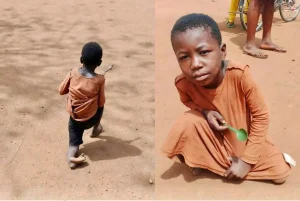
My mother had only three of us. Her first child, my brother, passed away before I was born. Her second, my elder sister, Elesi, lives with both physical and cognitive disabilities. As a child, I began to notice that my body did not look or function like hers. I could sense that something was different, though I was too young to truly understand what it was.
Over time, my patience wore thin as I waited for the day she might finally become independent. In reality, her daily life is quite limited: she eats when her food is served, sits before the television – often changing channels when no one is looking – and tunes the radio to the news or her favourite programmes.
She is particularly fond of presenters like Ohemaa Wɔyɛ Jɛ, Nana Romeo Wɛliwɛli, Captain Smart, Akumaa, Abeiku Santana, and Mike 2.
I am certain she dreams of meeting them one day, but I have always been careful not to ask her which one she prefers. I wasn’t ready to take on the task of making such a meeting happen, so I simply never bothered to ask.
Whenever my mother is away, I step in to care for her. There are mornings when I must bathe her before heading to work, leaving me physically and mentally drained before my workday has even begun. Consequently, I often report to work late, as the relentless rush-hour traffic offers no mercy.
Elesi is a complex mix of joy and frustration. While she possesses a unique sense of humour, being around her can also be exhausting.
Her speech is not very clear, yet those of us closest to her – especially my mother and I – have learned to decipher her every word.
There is something truly striking about how she interacts with visitors. When someone enters our home for the first time, she keeps her distance, almost as if she is gauging their spirit or sensing their intentions.
Only once she is comfortable does she draw close. Curiously, she seems to intuitively know which language a guest speaks.
If you speak English, she addresses you in English. If you speak a local language – be it Ewe, Ga, or Twi – she responds in kind.
How she manages this remains a mystery to me. Often, I must act as an interpreter to provide clarity to the guest, but her underlying understanding is undeniable.
One must never underestimate her. She is acutely aware of everything happening around her. As soon as I return from work or town, I must give her my full attention as she recounts the day’s activities – news from the radio, plots from the TV, and gossip from the neighbourhood.
She provides a detailed account of everything that occurred in my absence. While I am sometimes too skeptical to believe her stories, I have found that, more often than not, her “fillas” turn out to be true.
Despite her apparent inability to do basic things for herself, she has occasionally demonstrated extraordinary abilities – feats so inexplicable that some might attribute them to the work of a “witch” or “sorceress.”
Is she a witch? How did we discover these unusual depths within her state of disability? How did my eyes finally open to see through the darkness of her condition?
TO BE CONTINUED…
By Oyeba Mensah (Actress and HR practitioner)
SOURCE: DisabilityNewsGH.com