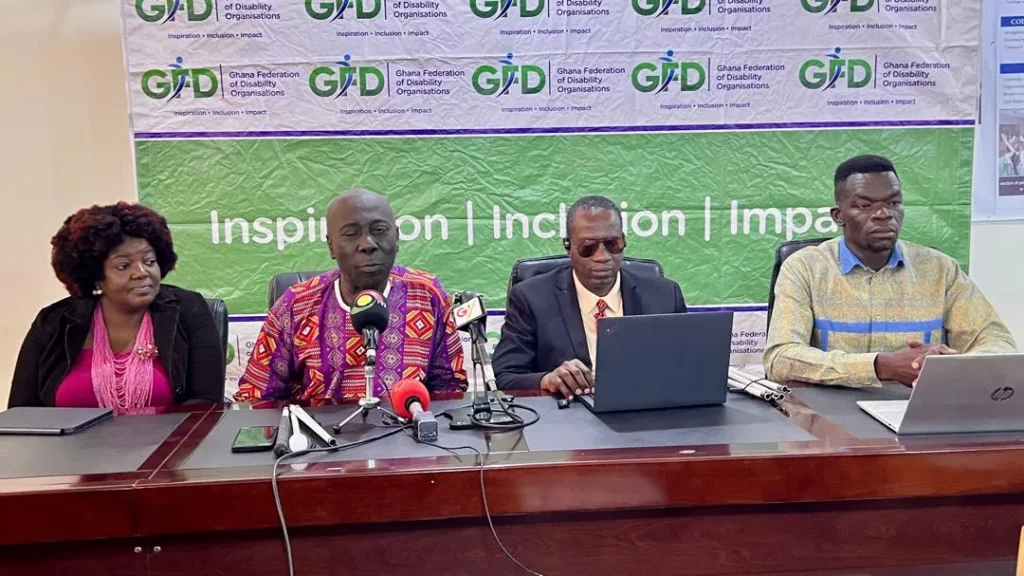
The Ghana Federation of Disability Organisations (GFD) has thrown its weight behind the Government’s proposed constitutional review to create 24 additional parliamentary seats through proportional representation for women, young people and persons with disabilities (PWDs).
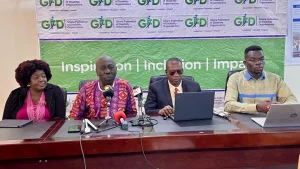
In a comprehensive position paper released after a press conference in Accra on Tuesday, October 6, 2026, the GFD described the proposed reform as a “historic opportunity” to deepen inclusive democracy and correct persistent political under-representation.
Under the Government’s White Paper on the review of the 1992 Constitution, Government has proposed capping Parliament at 300 members: retaining 276 constituency MPs under the current majoritarian system while allocating 24 additional seats via proportional representation among women, youth and PWDs, backed by an independent feasibility study.
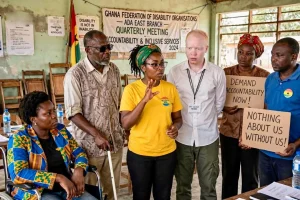
Moving Beyond “Voice About Us” to “Voice With Us”
While acknowledging that Ghana’s current constituency-based system is founded on every adult’s right to vote, the GFD argued that equal voting rights do not automatically translate into equal political representation.
According to the Federation, structural barriers, such as exclusionary party structures, expensive campaign financing, poor physical and digital accessibility, and entrenched social prejudices, prevent marginalised groups from breaking into Parliament on an even playing field.
“Equal voting rights do not automatically produce equal political representation,” the GFD stated in its position paper.
“Persons with disabilities, women and young people face barriers in party structures, campaign financing, political networks, communication, accessibility and social attitudes. Reserved and proportional seats are an affirmative constitutional mechanism to address unequal starting conditions rather than a privilege.”
The GFD emphasised that meaningful participation requires more than token consultation after national policies have already been formulated.
It demands a guaranteed physical presence inside the legislature to influence laws, scrutinise budgets and shape national priorities from inception.
“Persons with disabilities are directly affected by decisions on education, employment, health, social protection, transport, digital access, taxation, justice and public expenditure. Their direct participation improves the relevance of laws and reduces the risk of policies being designed without lived-experience knowledge”, GFD noted.
Strengthening Democratic Legitimacy
Citing findings from the Constitutional Review Commission, the GFD said that past public consultations recorded overwhelming calls for specific representation to counteract discriminatory assumptions about the suitability of disabled persons, women and youth for public office.
The Federation maintained that a Parliament that visibly includes groups historically excluded from political power enhances national cohesion and strengthens public confidence that Ghana’s constitutional democracy belongs to every citizen.
The GFD has consequently urged the Government, Parliament, political parties, the Electoral Commission and all stakeholders in the constitutional review process to safeguard the 24 proportional-representation proposal, marking a decisive shift from the recognition of rights to meaningful political participation.
SOURCE: DisabilityNewsGH.com