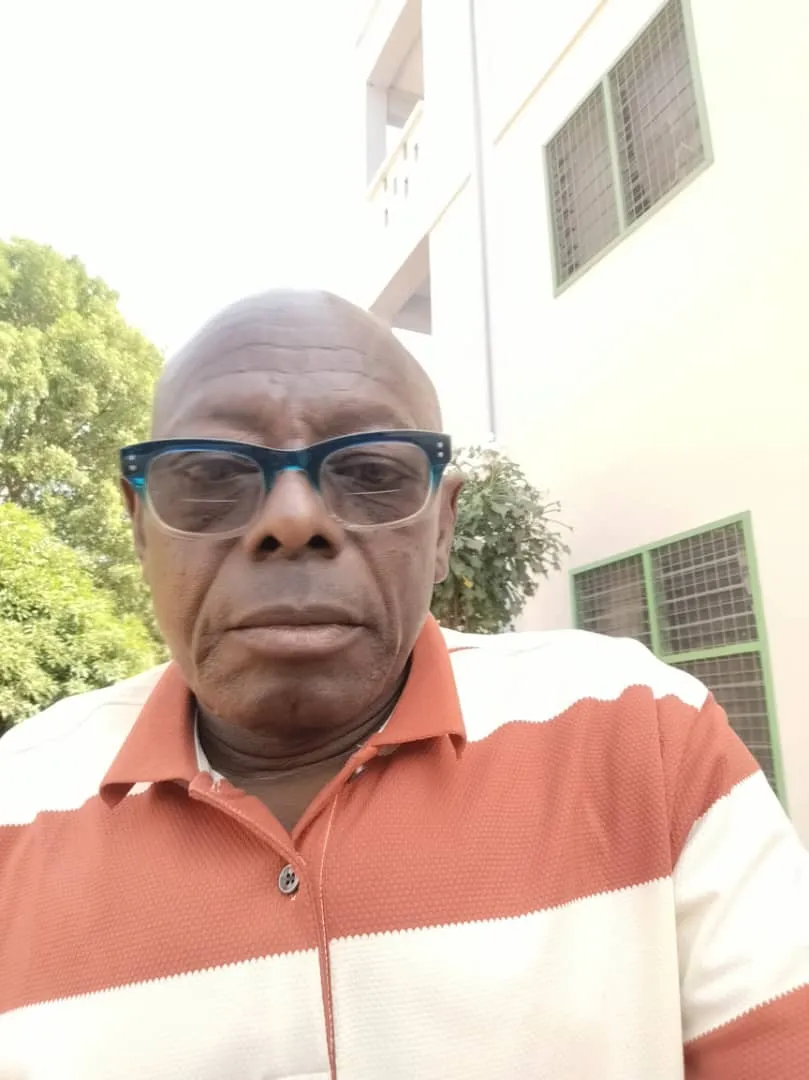
Despite its noble intentions, the District Assemblies Common Fund for Persons with Disabilities (PWDs) has largely failed to deliver significant economic empowerment, often pushing beneficiaries back into poverty. This stark assessment comes from Mr. Stephen Gyan, the Ashanti Regional Chairman of the Ghana Society of the Physically Disabled (GSPD), in an exclusive interview with DisabilityNewsGH.com.
Mr. Gyan revealed that since the fund began hitting accounts in 2010, its disbursement strategy has been fundamentally flawed.
He lamented that the initial approach was a simple handout, lacking true consideration for its impact on beneficiaries’ lives.
While acknowledging that some individuals had benefited from assistance with school fees, healthcare costs, or assistive devices, he stressed that ” on the economic development of the people, it hasn’t actually done much at all.
The GSPD Chairman highlighted two major issues with the current system: insufficient amounts and a misguided approach to supporting livelihoods.
“At the discretion of the committee, some decide that ‘we’ll give you this’ because the money is not enough,” he explained.
PWDs often receive meager sums, ranging from GHC 500 to GHC 2000, which Mr. Gyan argues is insufficient for any “meaningful business.”
Even more concerning, he noted, is the practice in some districts where committees opt to purchase items directly for beneficiaries instead of providing capital.
“They’ll go and buy the items for you,” Gyan said, describing scenarios where small quantities of provisions like milk, sugar, washing powder, or toilet rolls are provided.
“If it is toilet roll, two packets; the person may make just 1 cedi or 2 cedis or 5 cedis on that package. He’s only making a profit of 10 cedis.”
Mr. Gyan passionately argued that such practices are counterproductive. “When is the person going to make enough profit? This is their livelihood, they depends on it. They have no other. So eventually, you are pushing them back to poverty.”
He also cited situations where fridges and deep freezers were bought for people who had no access to electricity, resulting in the beneficiaries selling the gadgets.
To transform the fund into a true economic development tool, Mr. Gyan proposed several strategic changes:
1. Consolidate and Invest: Instead of spreading meager sums thinly, he suggested pooling funds to provide larger and more impactful capital to fewer beneficiaries at a time.
“If about 100 people apply and you notice that the money is not so huge after taking care of the emergency cases, why don’t you just take a few? It’s best to give a huge sum of money for them to do proper business that will help.”
2. Strategic Partnership with GEA: Mr. Gyan strongly advocated for a strategic partnership with the Ghana Enterprise Agency (GEA).
He believes the GEA is uniquely positioned to develop a more effective disbursement strategy, stating, “They could assess a business, like that of a provision seller, and determine the tailored support and capital required to ensure its long-term sustainability.
3. Capacity Building and Monitoring: Beyond providing capital, he emphasised the need for financial management orientation, continuous monitoring, and guidance on product selection.
“You put them through some orientation which will take place in the form of financial management. You’ll now look at what is more of a good market in the area. If it’s concentrating on only one product or two products that can make money.” He suggested focusing on bulk purchases of profitable items, like bags of sugar for repackaging.
4. Clarifying Capacity Building: Mr. Gyan also touched on a capacity building component within the fund, questioning its implementation. “There’s a component, but they haven’t specified who should do the capacity building.
He also called for auditors and internal accountability mechanisms to be more assertive, saying current processes enable funds to become a “cash cow” for some individuals.
Mr. Gyan strongly urged that the recent, more substantial allocations to assemblies be matched by a decisive change in approach. Otherwise, he cautioned, the considerable financial injection would simply be “like fetching water and pouring it in a basket,” a costly exercise yielding no real, lasting economic impact for the PWD community.
SOURCE: DisabilityNewsGH.com



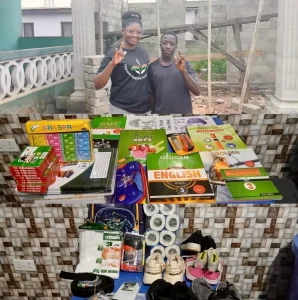
Am the CSPD chair for North Dayi-Anfoega. I assert to what the Ashanti GSPD chair said. It’s the same norm here with us. You see the assembly giving out 3 packs of biscuits, 4 packs of toilet rolls,few packs of razors etc to beneficiaries. When you talk, you’re tagged. But the fact remains, how can these sustain a pwd?
Even for the whole of 2025, no disbursement was done yet as at today 24/12/2025. When you talk no one seems to give any appropriate information.