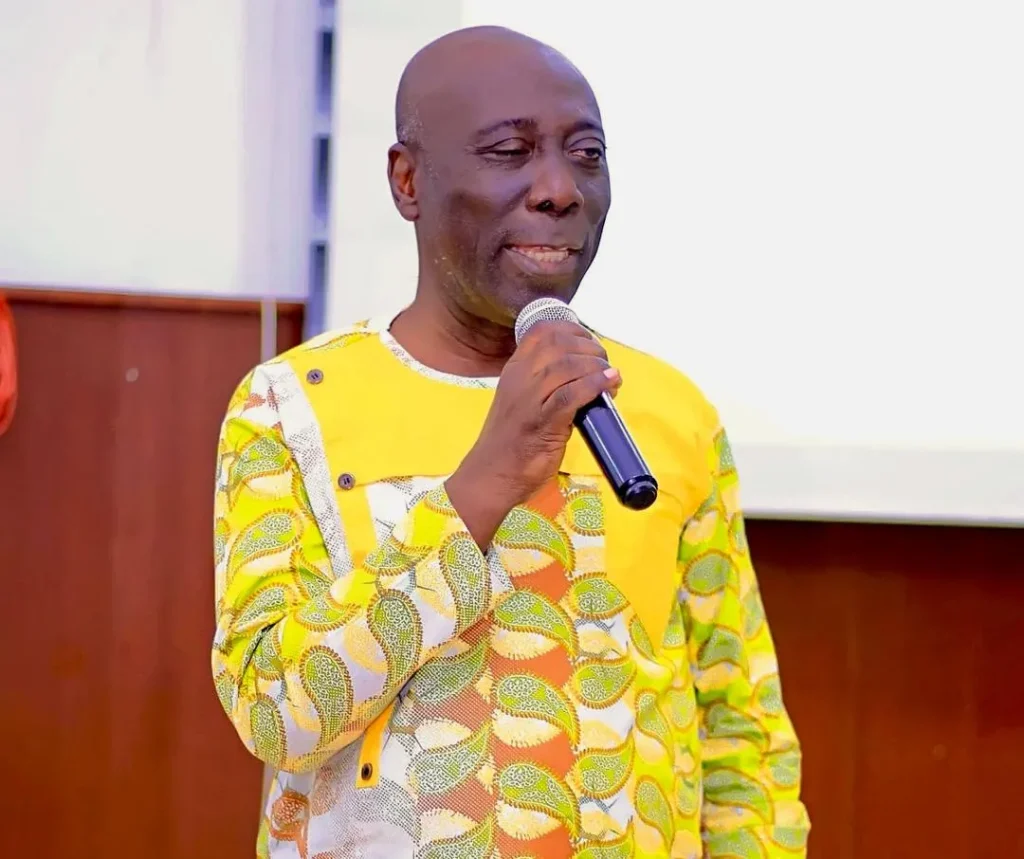
In the history of Ghana’s human rights movement, few figures loom as large, as courageous, or as structurally transformative as Mr Yaw Ofori-Debra.
From his humble beginnings as a teenage student organising his peers at Wenchi Secondary School to his current elevated seat as the Second Vice President of the World Blind Union (WBU), Ofori-Debra’s life is a masterclass in visionary leadership, strategic lobbying, and an unyielding refusal to accept discrimination as destiny.
His story is not merely one of personal triumph over societal barriers; it is the blueprint of how one determined individual can dismantle institutional prejudice, rewrite national laws, reshape continental constitutions, and build an inclusive world for millions of blind and partially sighted citizens.
The Birth of a Crusader: The Wenchi Experiment
The spark that ignited Ghana’s modern disability rights revolution was lit in the classrooms of Wenchi Secondary School – the first institution in Ghana to attempt an “integrated” education system for blind and sighted students.
While the government had opened the doors of admission to blind students, no structural preparations had been made to ensure learning was actually accessible.
There were no Braille libraries, no accessible audio materials, and no institutional support. Blind students were left to navigate an academic environment reliant entirely on the goodwill of their sighted classmates.
Where others saw a hopeless situation, the young Yaw Ofori-Debra saw an opportunity for structural reform.
Recognising that goodwill alone could not replace policy, Ofori-Debra mobilised his blind peers across secondary schools and universities to form the Ghana Students Union of the Blind. Their immediate objective was simple yet profound: demand dignified learning conditions.
Their fierce advocacy yielded a historic breakthrough. The Ministry of Education capitulated to their demands, instituting the official Disability Bursary (Reading Allowance) for blind students.
This revolutionary allowance enabled blind scholars to financially compensate their sighted peers who spent hours reading heavy textbooks aloud to them.
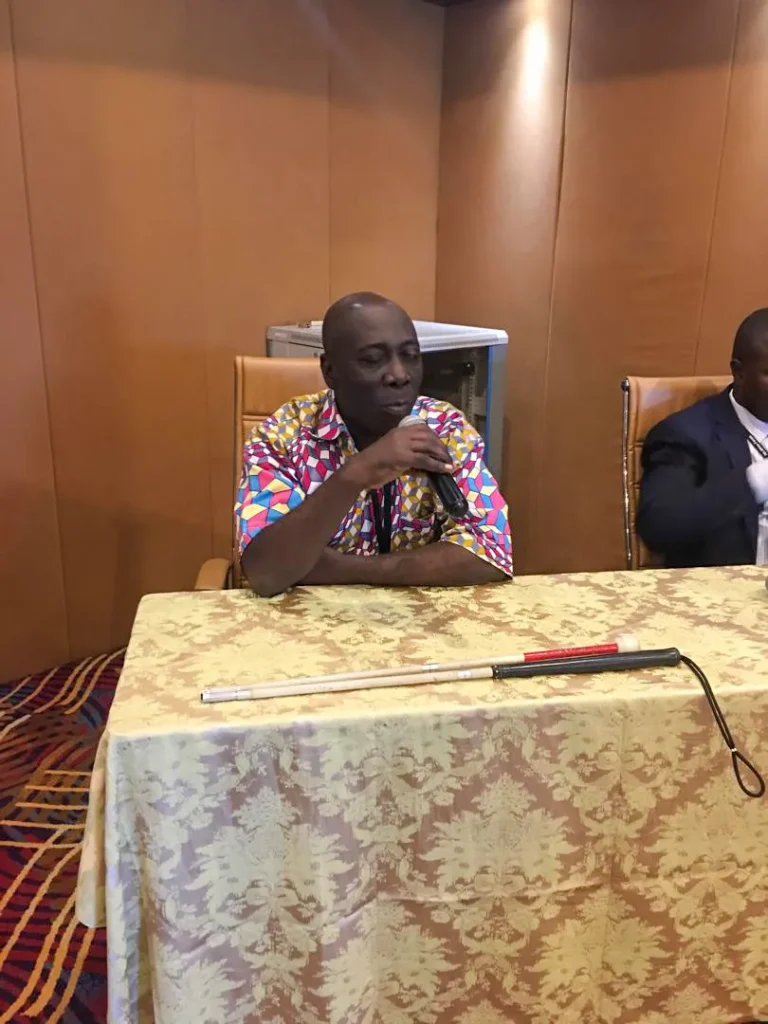
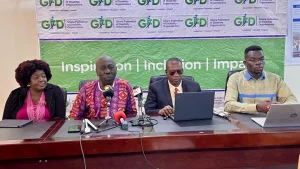
Photo Description: Mr Yaw Ofori-Debra sitting behind a table with a microphone is his hand, speaking at an event
Architect of Unity: Unifying the Blind Movement
Ofori-Debra’s rise through the administrative ranks was rapid, driven by a deep mastery of organisational diplomacy and grassroots mobilisation.
After serving as a district leader during his National Service, he was elected National Vice President of the Ghana Association for the Blind (GAB) in 2001, before ascending to the substantive Presidency in 2005.
At the time, Ghana’s disability landscape was fragmented and plagued by a debilitating conflict of interest. There existed two parallel bodies: the Ghana Association for the Blind (GAB), run by blind individuals, and the Ghana Society for the Blind (GSB), dominated predominantly by non-blind administrators. The divide often resulted in clashing mandates and diluted advocacy.
Recognising that a house divided against itself could not stand, Ofori-Debra initiated delicate, high-stakes unification talks in 2007.
His diplomatic persistence paid off in October 2010 with the historic merger of the two entities to form the modern Ghana Blind Union (GBU). It stood as his first monumental achievement as national president – a unified, formidable voice for all blind Ghanaians.
Transforming Continental Governance: The African Legacy
Ofori-Debra’s visionary leadership could not be contained within national borders. In 2008, attending his very first Congress of the African Union of the Blind (AFUB) in Morocco, he contested and won the Vice Presidency of the continental body. By 2015, he was elected substantive President of the African Union of the Blind (AFUB), serving until 2019.
His tenure as continental President fundamentally altered the constitutional governance of disability advocacy across Africa, leaving behind two major structural legacies:
1. Youth Empowerment at the Apex
Noticing that young blind Africans were excluded from decision-making tables, Ofori-Debra spearheaded constitutional amendments that created the AFUB Youth Committee. Crucially, he enshrined in the constitution that the Chairperson of the Youth Committee must hold an automatic, permanent seat on the AFUB Executive Board, guaranteeing that youth perspectives directly shape continental policy.
2. Mandatory Gender Equality
Addressing the severe underrepresentation of women in African disability leadership, Ofori-Debra lobbied for a ground-breaking constitutional amendment.
He instituted a mandatory rule: the Vice Presidency of AFUB must be permanently reserved for women. Under this constitutional clause, whenever a male President is elected, the Vice President must be female, and vice-versa – ensuring absolute gender equity at the highest level of governance.
Pioneering Inclusion in National Policy and Sports
Throughout his storied career, Ofori-Debra’s advocacy has touched every facet of civic life. As President of the Ghana Federation of Disability Organisations (GFD), he was instrumental in lobbying for the landmark passage of Ghana’s Persons with Disabilities Act, 2006 (Act 715).
His policy victories read like a master-list of civil rights achievements in Ghana:
• Securing monthly transport and guide allowances for public sector workers with disabilities.
• Establishing National Disability Day to drive public sensitisation.
• Initiating the National Disability Summit to bring duty-bearers directly to the negotiating table.
• Forming Parliamentary and Media Caucuses on Disability to embed inclusion into lawmaking and reporting.
• Facilitating the historic admission of the GFD into the Trades Union Congress (TUC) in 2023, embedding disability rights directly into mainstream labour movement negotiations.
Beyond policy and labour, Ofori-Debra recognised the transformative power of physical culture. Noting the complete absence of sporting opportunities for the blind, he established the sports wing of the GBU, organising regional vacation competitions.
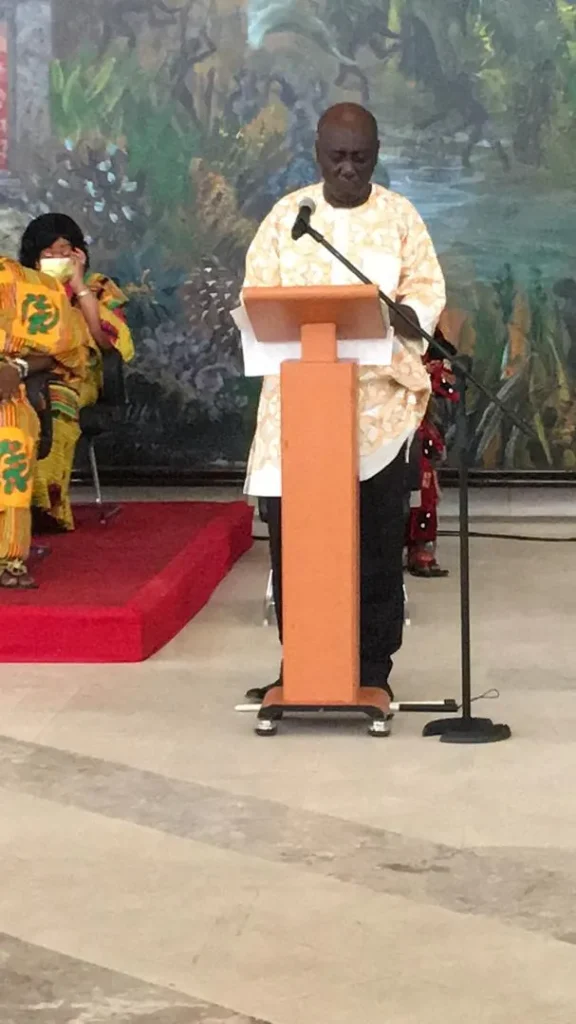
Photo Description: Mr. Ofori-Debra standing behind a Lectern, addressing Ghana’s first disability summit.
Service Beyond Disability: Civic Leadership in Local Governance
Mr Ofori-Debra’s passion for public service extended far beyond the boundaries of disability advocacy. His administrative competence and passion for social welfare were recognised at the municipal level, leading to his appointment to the Birim Central Municipal Assembly on two separate occasions (2006–2008 and 2019–2021).
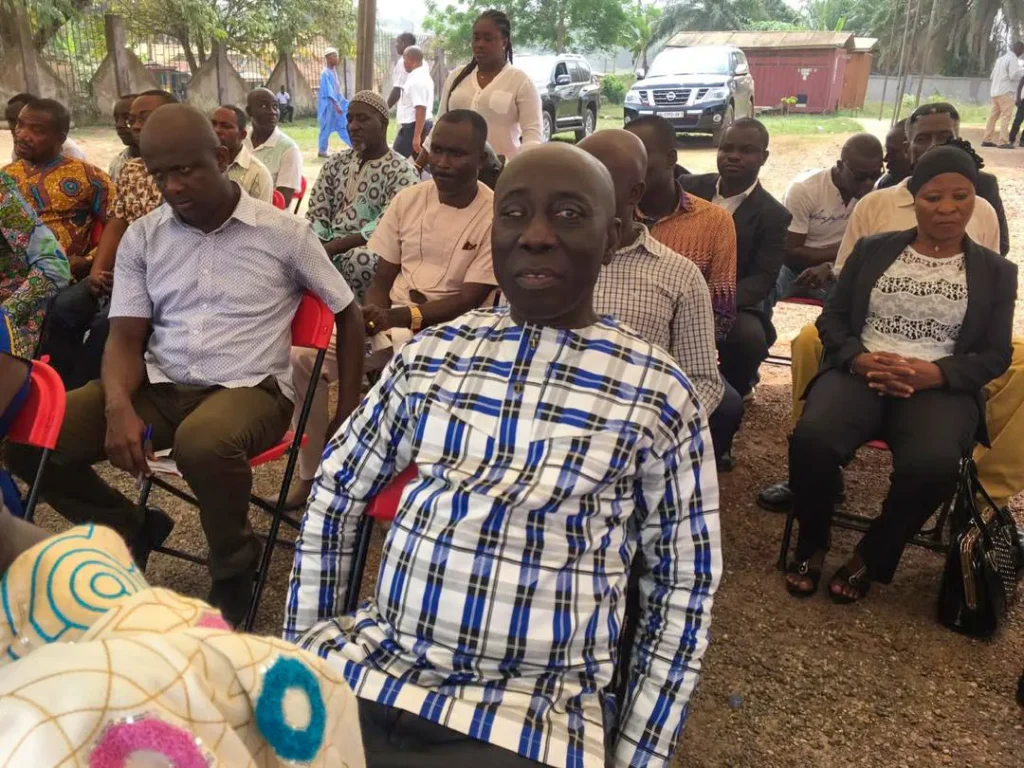
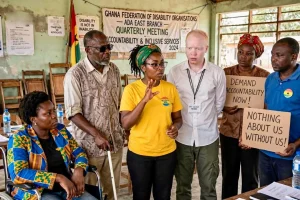
Photo Description: Mr Ofori-Debra sitting among members of the Birim Central Municipal Assembly
A Crown of Global and National Honors
Decades of selfless leadership have earned Mr. Ofori-Debra global and national acclaim across multiple decades:
• 2018 Martin Luther Award: In 2018, he was honoured by the United States Embassy in Ghana with the prestigious Martin Luther Award for Peace and Social Development, recognising his non-violent civil rights crusade and tireless dedication to human dignity.
• Order of the Volta (2024): On 30th December 2024, at a state ceremony inside the Jubilee House in Accra, the Republic of Ghana formally acknowledged its immense debt to Yaw Ofori-Debra.
His Excellency President Nana Addo Dankwa Akufo-Addo conferred upon him the Order of the Volta – one of the nation’s highest civilian honours – for his extraordinary, lifelong contributions to the welfare of PWDs across Ghana and the globe.
The prestigious award placed Ofori-Debra alongside distinguished national figures, including Vice President Dr Mahamudu Bawumia (who received the Order of the Star of Ghana).
In his citation, President Akufo-Addo lauded Ofori-Debra for his “tireless efforts in breaking down societal barriers, advocating for policy changes, and empowering persons with disabilities to participate fully in every aspect of life.”
• GFD Super Star Award (2025): At the maiden Ghana Federation of Disability (GFD) Awards in 2025, Mr Ofori-Debra received the Super Star Award, the highest honour of the ceremony. The award recognised not only his transformative tenure as former GFD President, but also his lifelong, foundational contributions to the entire disability movement.
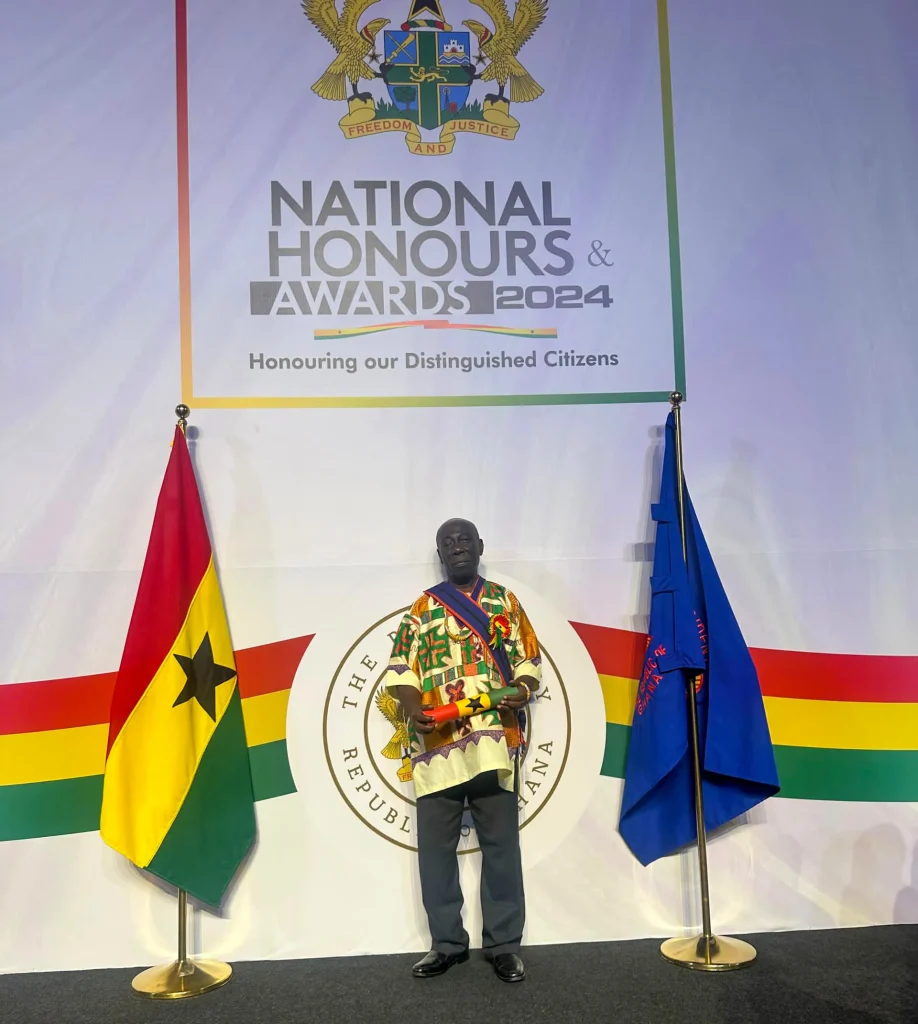
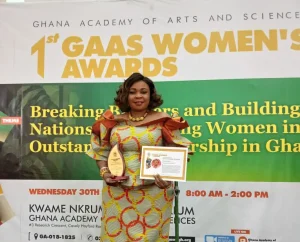
Photo Description: Mr Ofori-Debra standing while holding his national award in front of the National Honours and Awards backdrop
A Vision for the Future: Employment, Tech, and Political Power
Now serving on the global stage as Second Vice President of the World Blind Union (WBU), Ofori-Debra’s heart remains focused on the next generation of blind and partially sighted youth.
He is currently waging an aggressive campaign on three critical global fronts:
1. Eradicating Graduate Unemployment and Underemployment
Ofori-Debra is calling on the United Nations to impress upon member states the urgent need to implement targeted recruitment frameworks for highly qualified blind graduates.
“There are many blind young people with professional qualifications who are struggling in deep poverty due to unemployment,” Ofori-Debra emphasises. “Even those who are employed suffer severe underemployment – they are denied the tools, responsibilities, and promotions required to rise to the top of their fields.”
2. Digital Exposure in the Tech Revolution
With the rapid expansion of artificial intelligence, digital innovation, and remote global economies, Ofori-Debra is advocating for blind youth to be given international exposure through global tech seminars and conferences.
He warns that without intentional exposure to modern technological tools, blind youth risk being permanently left behind in the global economy.
3. Stepping Into Mainstream Politics
His ultimate charge to young blind citizens is a call to political boldness. He urges young blind Africans not to limit themselves strictly to disability organisations, but to also actively join mainstream community organisations, student governments, and national political parties.
“Do not wait for leadership to be handed to you as charity,” Ofori-Debra urges the youth. “Get close to the blind unions, build your capacity, enter mainstream politics, fight for leadership roles, and prepare yourselves to lead your nations.”
The Eternal Beacon
From a determined student in Wenchi to a decorated national hero holding court at the United Nations and the World Blind Union, Mr Yaw Ofori-Debra embodies the ultimate truth of the disability movement: impaired vision is never a bar to limitless vision.
As Ghana and the world navigate the complex journey toward full human rights compliance, Yaw Ofori-Debra stands as an eternal beacon of hope – proving that with resilience, intellect, and selfless dedication, one man can truly change the world.
By DisabilityNewsGH Editorial Team
SOURCE: DisabilityNewsGH.com