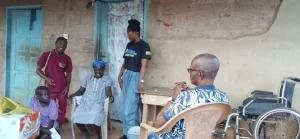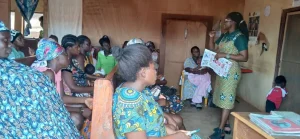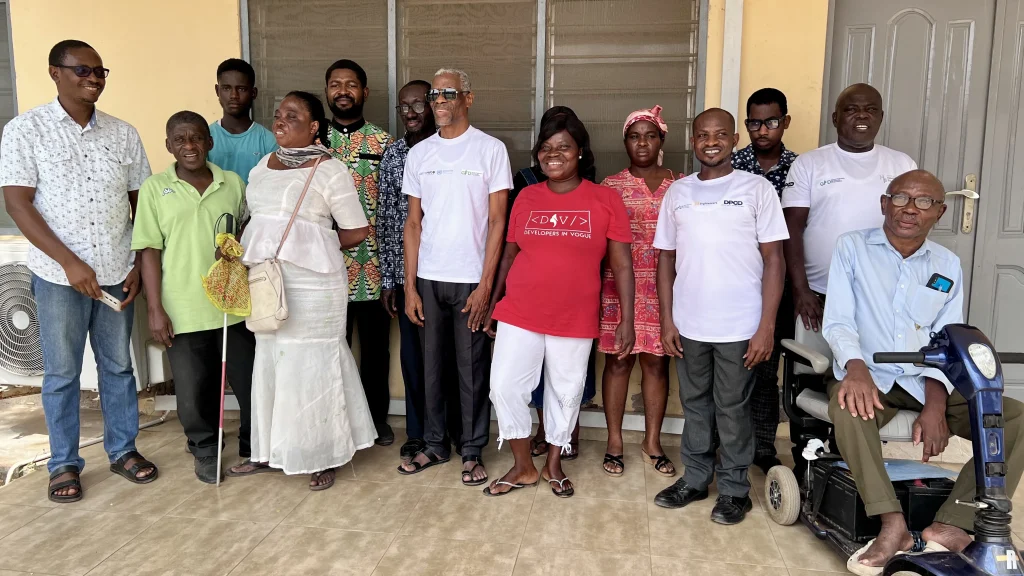
On Monday, March 16, 2026, the President of the Ghana Federation of Disability Organisations (GFD), Mr. Joseph Atsu Homadzi, paid a strategic monitoring visit to the federation’s Weija-Gbawe Municipal branch of Accra.
The visit was aimed at assessing the well-being of members and addressing leadership challenges, while synchronising local grievances with the national advocacy agenda.
The engagement comes at a critical time for the disability community, as the frustrations shared by members in Weija-Gbawe regarding the “employment vacuum” directly mirror the national sentiment that has led the Association of Unemployed Graduates with Disabilities to announce a protest at the Presidency on March 24, 2026.
The Employment Crisis and the 5% Quota
During the consultation, members highlighted a glaring contradiction in state policy: while the government’s free tertiary education for PWDs is a welcome relief, it remains incomplete without a clear path to the workforce.
“The free tertiary education policy will mean very little if our employment is not guaranteed after school,” members stated, appealing for a formal policy to ensure the automatic employment of PWD graduates immediately following their National Service.
The fragility of PWD economic security was further emphasised by reports from members who were summarily dismissed from the Youth Employment Agency (YEA) without cause.
Mr. Homadzi revealed that the GFD has been making consistent efforts to meet with the CEO of the YEA over the matter but has yet to be granted an audience.
Addressing the broader solution, Mr. Homadzi disclosed that the GFD is currently serving on a Technical Committee formed by the Minister for Gender, Children, and Social Protection.
This committee is tasked with developing a blueprint for the 5% employment quota promised by President John Dramani Mahama, ensuring that all state agencies have a clear roadmap for implementation.
He assured members that the federation will continue to pursue both the YEA dismissals and the national quota to a favourable conclusion.
Artisan Support and “Affirmative Patronage”
For those in the informal sector, the challenges are equally daunting. Local artisans complained of low patronage for their products and called for an “Affirmative Patronage” policy.
They argue that the state should lead by example by intentionally prioritising the purchase of goods produced by PWDs, ensuring that entrepreneurship remains a viable path to independence.
Social Stigma and Community Inclusion
The visit also brought to light deep-seated social challenges. Members shared that in many communities, PWDs are only accorded respect if they are highly educated or perceived to be “more successful” than others.
“We are often not listened to and our perspectives are not considered unless they know you are educated,” one member noted.
This exclusion is particularly severe for the Deaf community, who face immense communication barriers.
Members reported that the inability to interact with the wider community leads to the Deaf being routinely ignored in daily social and economic life.
The Crisis in Healthcare Access
Beyond social stigma, healthcare remains a major area of concern. Members identified inaccessible health infrastructure and the communication barrier between the Deaf community and healthcare providers as life-threatening challenges.
The lack of sign language interpreters and disability-sensitive facilities means that PWDs often struggle to access the basic medical care they are entitled to.
A Representation Vacuum in Local Governance
A major point of concern raised during the visit was the total lack of PWD representation within the local government structure.
Despite a directive for all Metropolitan, Municipal, and District Assemblies (MMDAs) to reserve at least two government appointee slots for PWDs, it was revealed that the Weija-Gbawe Municipal Assembly currently has no PWD appointee.
This failure is part of a broader regional trend. It came to light during the monitoring visit that across the entire Greater Accra Region, only two PWDs currently hold government appointee slots in the 29 assemblies.
In response, Mr. Moses Forjour of the GFD urged members to run for Unit Committee and Assembly Member positions in the upcoming local government elections to build their political careers.
He revealed that with support from the European Union (EU), the GFD is prepared to assist PWDs in participating in these elections.
“We must ensure our voices are heard at all levels,” Mr. Forjour stated. “Otherwise, others will always decide for us and exclude us in the process.”
Financial Milestone: The 5% DACF Implementation
Ending on a significant economic note, Mr. Homadzi announced that the implementation of the District Assemblies Common Fund (DACF) for PWDs increment – from 3% to 5%, is officially set to commence this quarter.
Following Parliament’s adoption of the 2025-2026 budget, this 2% increase represents a substantial boost in direct government support for PWDs.
While systemic barriers in health and employment remain, the DACF increase stands as a critical financial tool to support the community at the local level.
SOURCE: DisabilityNewsGH.com