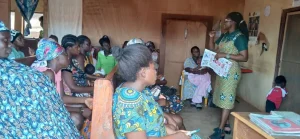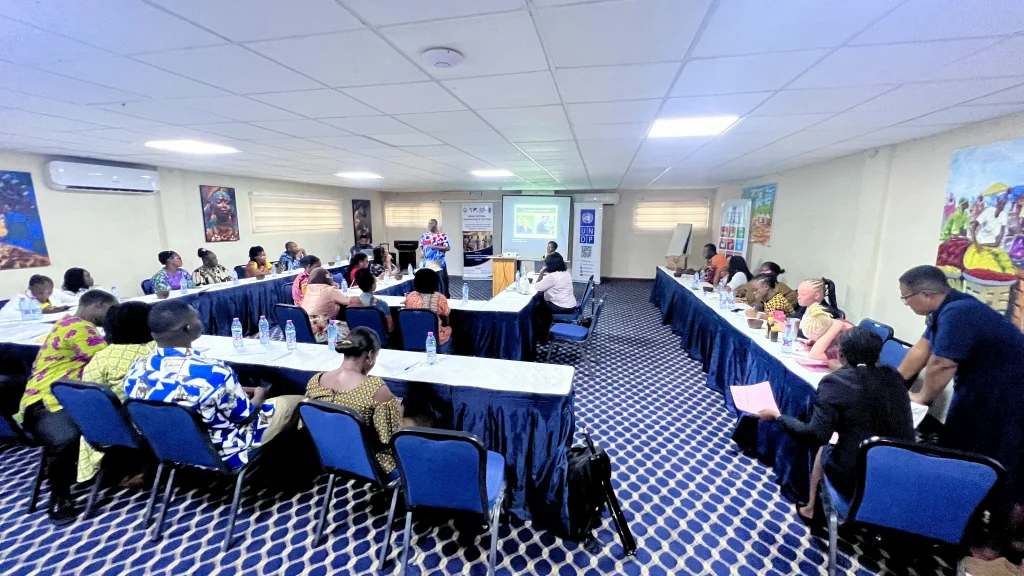
A two-day intensive capacity-building workshop aimed at empowering women with disabilities concluded on Tuesday, April 28, at the Sunlodge Hotel in Tesano, Accra.
Organised by the Ghana National Association of the Deaf (GNAD) with funding from the United Nations Development Programme (UNDP) and the Global Disability Fund, the training sought to
advance disability-inclusive governance in Ghana.
While Ghana has made notable progress through the passage of the Persons with Disabilities Act (Act 715) and the signing of the UN Convention on the Rights of Persons with Disabilities (UNCRPD), women and girls continue to face systemic discrimination.
The workshop was designed to address the fact that women remain underrepresented in decision-making spaces, government appointments, and even within the leadership of Organisations of Persons with Disabilities (OPDs).
In his welcome address at the start of the event, the Executive Director of GNAD, Juventus Duorinaah, Esq., described the initiative as a “strategic investment in inclusion and leadership.”
He reminded participants that Article 6(1) of the UNCRPD explicitly recognises the “multiple discrimination” faced by women and girls, challenging state parties to take decisive measures to ensure their equal enjoyment of human rights.
“Despite these legal frameworks, women with disabilities are still less likely to take up leadership positions and more likely to face limited opportunities in governance,” Mr. Duorinaah noted.
A core element of the training was its unique “women-only” model. According to the project concept, GNAD identified that when men and women are trained together, women often struggle to keep up with the learning pace or feel restricted by cultural and gender factors.
Mr. Duorinaah reinforced this in his address, stating: “Providing targeted training solely for women and girls is essential to create a space where they feel free to contribute and learn.”
This unique model allowed 40 participants from across 10 different OPDs to engage confidently and master the complexities of disability law and advocacy.
The impact of this targeted approach was echoed by the participants themselves. Bernice Agboada, an advocate with albinism, noted that the workshop revolutionised her understanding of advocacy.
“I have always thought just doing social media advocacy was the main way to get people to understand me, but after the workshop, I realised there are other holistic methods like lobbying and direct engagement with duty bearers,” she said.
She emphasised that the training marked a shift in mindset. “This section has taught me that we are moving from the charity and medical model to a human rights model where we demand our rights.
Seeking for my rights as a woman with disability is not a favour being granted me; it is my human right to enjoy everything from accessible infrastructure to medical assistance and education.”
Similarly, Sophia Acheampong, President of the Ghana Association of Little Persons, described the two days as a period of profound enlightenment.
“I thought I knew all I needed to know, but I realised I was in ‘Class 1.’ What I have learnt made me realise I didn’t fully understand the challenges and what to do or who to ask in specific situations,” she admitted.
Madam Acheampong praised the interactive nature of the workshop, noting: “What made me happy was the interactions between the facilitators and the participants; it gave everybody the space and chance to ask questions and learn from others. I’ve really been enlightened and I can now do something better for myself and every other woman or child who has a disability.”
The training specifically addressed the “invisible” barriers faced by women with Deafblindness, short stature, mental health conditions, and Cerebral Palsy (CP).
By focusing on leadership, governance, and data-driven advocacy, the workshop equipped these women with the tools to use facts and statistics to conduct advocacy at both regional and national levels.
The workshop targeted representatives from a broad spectrum of the disability community, including:
1. Inclusive Family Alliance
2. Ghana Society of the Physical Disability
3. Ghana Association of Persons with Albinism
4. Ghana Burnt Survivors
5. Association of Persons of Little Stature
6. Ghana National Association of the Deaf
7. Ghana Association of Deaf Blinds
8. Ghana Stammer Association
9. Ghana Blind Union
10. Inclusion Ghana
With the training now concluded, GNAD expects that at least 70% of the participants will demonstrate a clear understanding of the UNCRPD and Act 715.
In his final charge, Mr. Duorinaah expressed his gratitude to the UNDP Ghana Office and the Global Disability Fund while urging the participants to become the “voice” for others.
“I encourage you to turn the knowledge gained here into action so that you can effectively voice for your rights and the rights of other women with disabilities,” he said.
This activity contributes to the broader national goal of advancing disability rights by ensuring that women are no longer just beneficiaries of policy, but the leaders who shape it.
SOURCE: DisabilityNewsGH.com