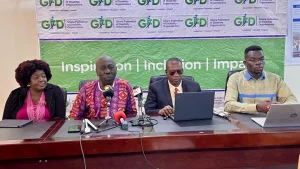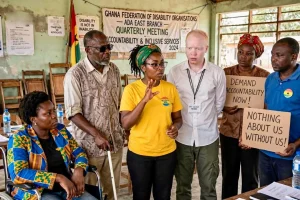
The National Council on Persons with Disability (NCPD), the statutory body overseeing disability affairs in Ghana, has broken its silence on the ongoing Common Fund dispute in the Ada East District of the Greater Accra Region.
Speaking on behalf of the Council, Mr Joshua Addy, the NCPD’s representative on the District Fund Management Committee, has clarified the Assembly’s position, asserting that the disbursement process remains transparent despite intense public criticism.
The Policy Shift: From Cash to Sustainable Support
According to Mr Addy, the current tension originates from a fundamental shift in how the 3% District Assemblies Common Fund (DACF) is managed.
Initially, the committee planned to disburse cash amounts of GH₵3,500 for new applicants and GH₵3,000 for previous beneficiaries. However, this decision was rescinded following an intervention by the District Coordinating Director.
The Director argued that previous cash disbursements were frequently “squandered,” failing to provide the long-term economic empowerment intended by the state. Consequently, the Assembly moved toward a “needs-based” procurement of start-up items—a move Mr Addy insists was designed to ensure the 36 vetted applicants received lasting livelihoods.
He told DisabilityNewsGH.com that the leadership of the disability community agreed to the suggestion by the Coordinating Director to disburse start-up items instead of cash.
A Detailed Vetting Process
To prove the Assembly’s commitment, Mr Addy pointed to the comprehensive vetting of the 2025 first and second-quarter applicants. The list consists of:
• 24 Entrepreneurs: Slated for start-up items, including 16 persons with physical disabilities, 6 with visual impairments, one deaf person, and one with cerebral palsy.
• 12 Students: Slated for educational cash support totalling GH₵27,100. This includes eight deaf students, two with physical disabilities, one with autism, and one visually impaired student.
• Organisational Support: A further GH₵13,500 has been allocated to support the administrative functions of the local Ghana Blind Union (GBU), the GFD, and the Ghana Society of the Physically Disabled (GSPD), with each group to receive GH₵4,500.
The Legal Dispute: Guidelines vs. National Law
The root of the standoff remains a fundamental legal disagreement. The PWD leadership, led by GFD Representative and chairperson of the Fund management Committee, Mr Theophilus Dugbatey Ayim, insists on their right to be part of the vendor selection process, citing the new Common Fund Disbursement Guidelines.
However, the Assembly—backed by Mr Addy—argues that the Public Procurement Act is the supreme law and does not allow for “user departments” or beneficiaries to have a say in selecting suppliers.
“Under the Procurement Act, beneficiaries can only reject items if they do not meet specifications; they cannot legally demand to be part of the supplier selection,” Mr Addy explained.
Meanwhile, Mr. Ayim has questioned why the other members of the committee agreed to set aside the new common fund guideline and supported the Assembly to rely on the Public Procument Act, asking: “Of what use is the new guideline then?”.
Touching on the sole-sourcing allegation, Mr. Joshua Addy maintained that the supplier was selected through a competitive due process and not “handpicked” by the Coordinating Director.
He further dismissed claims of “clandestine” top-up purchases, framing the second disbursement attempt as an honest effort to reach alternative beneficiaries who were ready to work.
A Logistical “Error of Judgment”
Mr Addy did, however, admit to a regrettable blunder: the procurement of perishable items like okra, onions, and tilapia. This error, he acknowledged, led to a desperate situation where officials—fearing the goods would rot after the initial boycott—pursued beneficiaries to their homes late at night.
While he urged the community to remain calm, he insisted that this “logistical slip” should not overshadow the legal and economic integrity of the overall programme.
SOURCE: DisabilityNewsGH.com