Ghana’s disability community has been hit by a wave of shock and frustration following a startling revelation that contradicts recent government assurances regarding the progress of the Disability Amendment Bill 2025.
Until Monday, May 11, 2026, stakeholders were under the firm impression that the Bill was heading to Cabinet for approval before its transmission to Parliament.
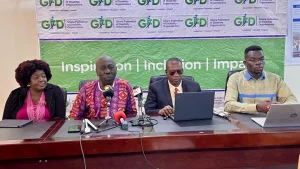
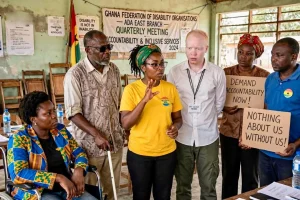
This belief was founded on a high-level briefing held only last week, when the Ghana Federation of Disability Organisations (GFD) and other partners visited the Minister for Gender, Children and Social Protection, Dr. Agnes Naa Momo Lartey.
During that meeting, Dr. Lartey informed the delegation that the Attorney General had already reviewed the Bill and made specific recommendations for revision.
The Minister stated that these changes would be implemented, and the draft Bill would then go to the Attorney General for approval before being forwarded to Cabinet.
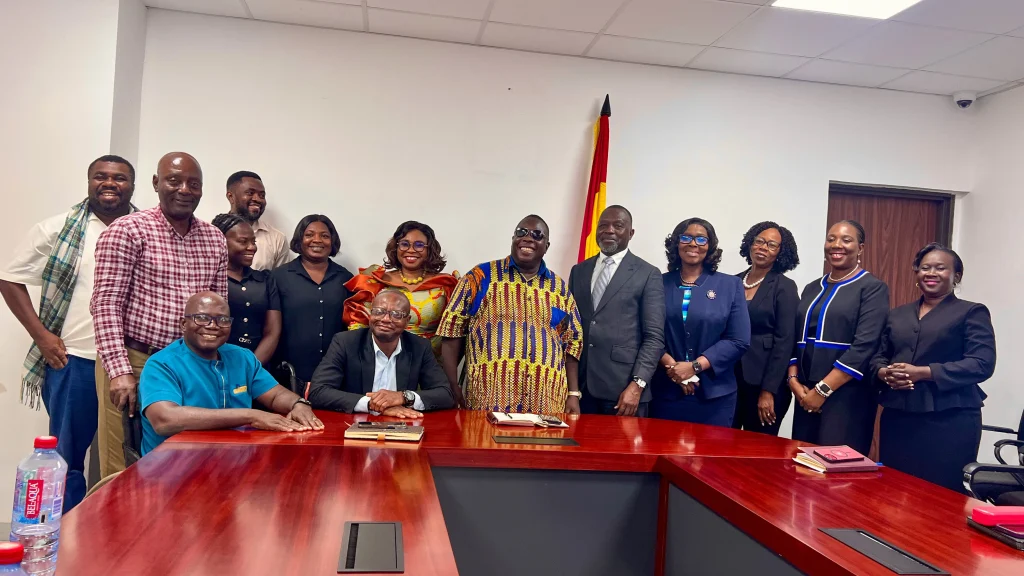
However, the narrative shifted dramatically on Monday during a follow-up visit to the Attorney General and Minister for Justice, Dr. Dominic Ayine.
Much to the surprise of the leadership present, Dr. Ayine disclosed that he was yet to receive any briefing on the Bill – despite having been in office for nearly 18 months.
The revelation has sent ripples of concern through the disability movement, raising questions about the transparency of the communication coming from the Gender Ministry.
Mr Alex Tetteh, President of the Centre for Employment of Persons with Disabilities (CEPD), expressed his astonishment at the discrepancy.
“I am surprised the Minister said that; for all this while he has not been briefed. It means that it was good that we came; we should have come earlier,” Tetteh said in an interview. “The government may have a lot on its table, so if you don’t push, that is it. It reminds the disability movement that we should not think things will work normally. We must take our destiny into our own hands and move so that things work as they should.”
The Acting Deputy Executive Director of the GFD, Mr Moses Forjour, described the news as “quite concerning.”
“I want to believe that it is not true; otherwise, this is not good,” Mr Forjour told DisabilityNewsGH.com in a telephone interview.
He found the revelation strange, considering the numerous past engagements with the Gender Ministry and the assurances received.
Compounding the confusion is the fact that the meeting with the Attorney General included the Ministry’s Chief Director, the officer in charge of legal drafting, and other senior officials.
Notably, none of these senior officers intervened or clarified that the purported engagements with the Attorney General’s office might have occurred through different channels or in the absence of the current Minister.
The meeting also served as a critical platform to advocate for the African Disability Protocol (ADP), a treaty the community has been pushing for since 2018.
Ms. Veronica Denyo Kofiedu, one of the Convenors of the Network of Women with Disabilities, Africa (NEWDA), noted that Ghana’s delay is uncharacteristic of its continental standing.
“We have come to petition the Attorney General to add his voice and speak to his colleague, the Minister for Foreign Affairs, who is responsible for this ratification, to fast-track it for us,” Ms. Kofiedu stated.
She emphasised that without this law, women and girls with disabilities remain invisible. “Without these laws backing us, we face great barriers in decision-making, employment, healthcare, and education.”
Further highlighting the legislative inertia, Sightsavers’ Programme Manager, Mr Mohammed Abdul-Razak, raised the issue of the Marrakesh Treaty.
Although ratified by Ghana in 2016, the treaty has not been domesticated, leaving it “ineffective” in practice.
Mr Abdul-Razak explained that the current Copyright Law 690 prevents the independent conversion of materials into accessible forms, such as Braille or audio, without the author’s prior authorisation.
“This creates what we call a ‘book famine’ for the visually impaired,” he explained.
He urged the Attorney General to lead the amendment of the Copyright Law to grant authority to entities like the Ghana Blind Union to create accessible versions of books.
“I throw the challenge directly to organisations of persons with disabilities to ensure consistent and constant pressure to ensure this domestication is done, because it has been nearly 10 years since ratification,” he added.
Despite the apparent administrative breakdown, Dr. Ayine gave the delegation a warm reception and assured the GFD leadership and representatives from Sightsavers that he would immediately call for a formal briefing.
He promised to push for expedited action on the Amendment Bill and pledged to engage the Minister for Foreign Affairs regarding the ADP.
The push to amend the Persons with Disability Act, 2006 (Act 715) began in 2019, following the identification of significant gaps between the domestic law and the United Nations Convention on the Rights of Persons with Disabilities (UNCRPD).
The resulting Disability Amendment Bill 2025 represents years of advocacy aimed at ensuring Ghana’s laws meet international human rights standards.
However, the journey has been defined by a cycle of administrative promises that have yet to translate into the actual passage of the law, leaving the community to wonder when “promises” will finally turn into “action.”
SOURCE: DisabilityNewsGH.com