New research findings from the “AT2030: Beyond Access – How Assistive Technology Becomes Life-changing” study reveal a profound shift in the lives of Assistive Technology (AT) users in Ghana.
Initial data indicates that AT not only enables academic and economic success but also dramatically alters self-perception, transforming individuals from being viewed as “burdens” to “independent” and “capable”.
However, the study also highlights critical nuances: while AT is transformative for users, the unmitigated burden on caregivers often persists, and the “life-changing” potential of technology is frequently limited by hostile infrastructure.
Key Findings: Transformation, Challenges, and the Power of Language
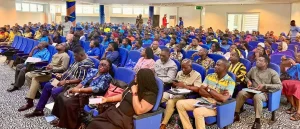
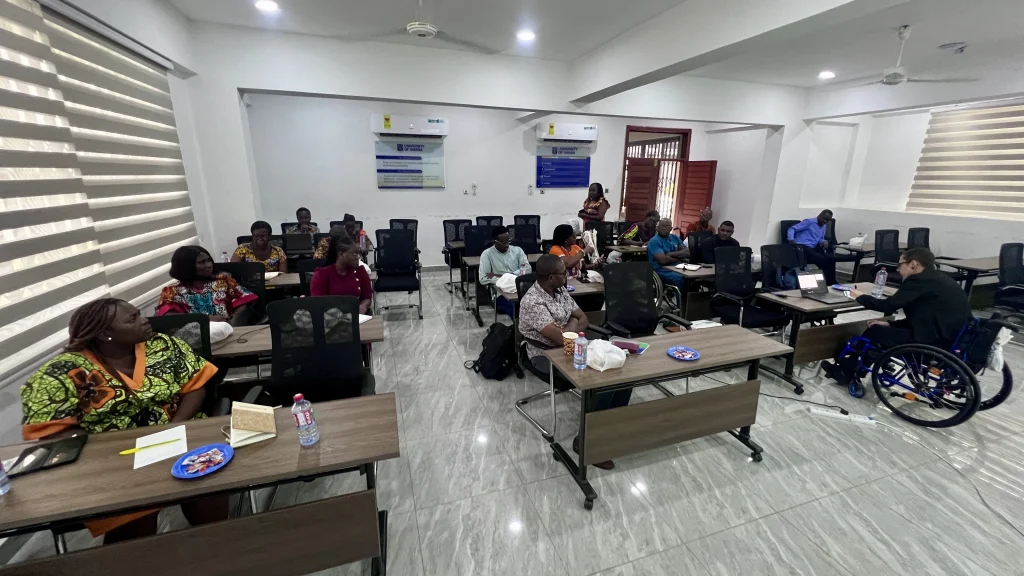
Presented at a knowledge-sharing workshop on February 26, 2026, at the Research and Innovation Directorate, University of Ghana, these early insights are drawn from data collected from AT users and their caregivers in Ho and Accra, involving both adults and children using various types of assistive technology.
1. Direct Life Transformation: For a significant number of participants, AT proved genuinely life-changing and transformative.
Stories emerged of individuals securing university degrees, learning trades, or successfully starting businesses – achievements they explicitly stated would have been impossible without their assistive devices.
2. The Unseen Burden on Caregivers: The research uncovered a critical nuance: while AT brought profound changes for users, it often did not equally transform the lives of their caregivers.
Focus groups revealed that caregivers frequently continued to bear the same, or even similar, responsibilities, indicating that the burden of care, though perhaps relieved in some aspects, remained substantial.
3. The Impact of Words: A compelling finding highlighted the transformative power of language. The study noted a significant shift in the words people used about persons with disabilities, as well as the words persons with disabilities used to describe themselves, after gaining access to AT.
Negative descriptors often “flipped” to positive ones, showcasing a rise in self-esteem and a perception of independence.
A Global Partnership for Defining True Impact
The research project is led by the Global Disability Innovation Hub (GDI Hub) at University College London (UCL), in partnership with the University of Ghana and the Talking Tipps Foundation.
Funded through the UK-led AT2030 programme, the study’s core objective is to move beyond conventional understandings of ‘impact’ and explore what ‘life-changing’ truly means from user perspectives.
In an interview with DisabilityNewsGH.com, Dr. Ellie Cole, a Research Fellow at the GDI Hub, explained the philosophy behind the study: “I’ve always been interested in what impact truly means, beyond just giving someone a device”.
If you give somebody a wheelchair, but the roads are not good and the person can’t get out of the house, that isn’t impact. ‘Life-changing’ means enabling a person to achieve what matters most to them – to achieve their goals and aspirations. That next step is what we’re exploring”, she added.
Collaborative Validation and Future Steps
The workshop served as a crucial platform, bringing together researchers, practitioners, organisations of persons with disabilities (OPDs), and AT users to validate these initial findings.
The diverse range of participants fostered a rich discussion, providing invaluable feedback to inform the next phase of the project.
With data collection recently concluded, the research team, including Dr. Ernestina Tetteh of the University of Ghana, Professor Silvia Gyan in Canada, and with the support of Gifty Ayoka, Director of Talking Tipps, will now move into a detailed analysis phase.
The findings are anticipated to be published and potentially replicated in other global contexts, such as Nepal, further driving innovation and research for a fairer world.
SOURCE: DisabilityNewsGH.com