Marking a significant leap forward for assistive technology and digital accessibility in West Africa, the 2026 Disability Inclusive Hackathon (DI-Hack) has announced a strategic partnership with the IEEE International Conference on Adaptive Science and Technology (ICAST).
The collaboration creates a unique, powerful pipeline connecting grassroots, inclusive innovations directly to global research, academic expertise, and international tech channels.
Scheduled to take place from October 21 to 23, 2026, at Academic City University in Accra, DI-Hack 2026 will run under the theme: “Innovating for Inclusion: Technology Advancing Social Progress.”
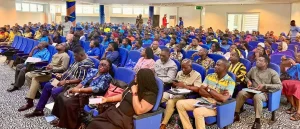
The high-energy, three-day event will bring together software developers, engineers, designers, researchers, students, and innovators to work side-by-side with persons with disabilities (PWDs).
Their goal is simple: to co-create practical, scalable technology solutions that dismantle systemic barriers to accessibility, communication, mobility, and independent living.
Shifting the Narrative: PWDs as Co-Creators
While modern technology has the power to transform lives, many mainstream digital tools and physical products are still designed without consulting the people who need them most. This oversight often results in expensive products that fail to address the actual, daily accessibility needs of persons with disabilities.
DI-Hack was established to disrupt this top-down approach. Unlike traditional tech marathons, DI-Hack employs a strict human-centered, co-creation model. Under this framework, persons with disabilities are not treated merely as “end-users” or passive test subjects – they are integrated into the hackathon teams as equal design partners.
Over the years, this collaborative approach has established DI-Hack as Ghana’s premier platform for disability-inclusive innovation, inspiring groundbreaking assistive devices, inclusive mobile applications, and highly successful digital accessibility platforms.
Connecting Research to Real-World Practice
The new partnership with IEEE ICAST represents a major milestone for the hackathon. As an internationally recognised conference, IEEE ICAST convenes global researchers, academics, policymakers, and engineering professionals to share cutting-edge advancements in adaptive science and technology.
By anchoring DI-Hack 2026 within the prestigious IEEE ICAST conference, organisers are bridging the gap between scientific theory and real-world, social practice.
For the young innovators participating in the hackathon, this means direct, unprecedented exposure to an international network of technology experts. The collaboration opens up invaluable opportunities for:
• Elite Mentorship: Direct guidance from IEEE engineers and academic researchers during the build phase.
• Global Visibility: A platform to showcase grassroots prototypes directly to international industry leaders and policymakers.
• Scaling Pathways: Potential funding, research publication, and business development channels to transition prototype ideas into marketable products.
A Shared Commitment to Social Progress
Organisers believe this partnership will significantly elevate the quality, sophistication, and commercial viability of the innovations built during the hackathon.
It also challenges mainstream researchers to adopt more inclusive, co-creative methodologies in their academic work.
As Ghana continues to position itself as West Africa’s leading hub for digital transformation, the DI-Hack and IEEE ICAST partnership serves as a timely reminder that meaningful innovation must be inclusive. True technological progress must not only focus on what is technically possible, but also on who benefits.
Join the Movement
DI-Hack 2026 and IEEE ICAST invite all passionate software developers, engineers, designers, academic researchers, students, and persons with disabilities to join this landmark collaboration.
Together, participants will help design a barrier-free future where technology serves as an equaliser and advances social progress for all.
SOURCE: DisabilityNewsGH.com