The Ghana National Association of the Deaf (GNAD) has called on tertiary institutions to go beyond admission and embed stronger support services for Deaf learners in their academic policies.
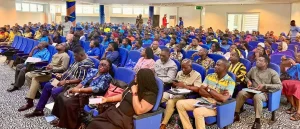
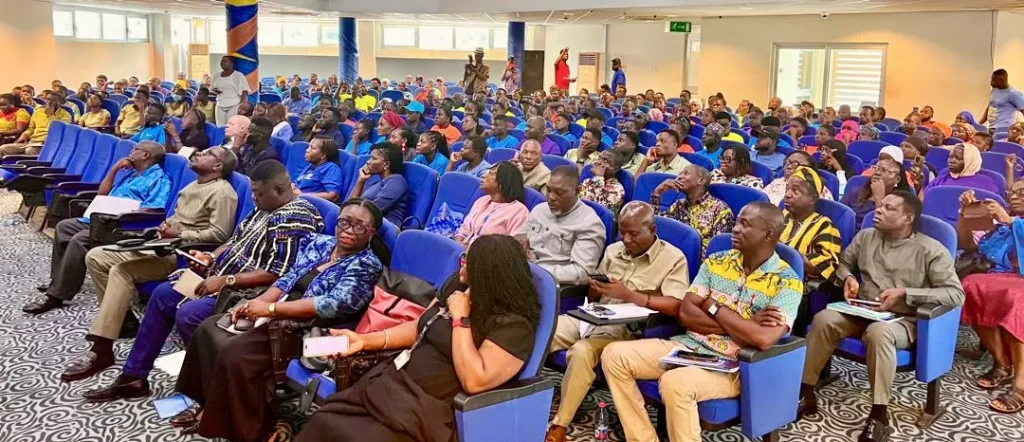
The call was made at a national policy dialogue on “Strengthening Access to Quality Multilingual Inclusive Education for Deaf Learners in Ghana: The Role of Tertiary Education Institutions” — sponsored by the Danish Deaf Association (DDL) — held at the Ghana Shippers’ Authority in Accra on Tuesday, September 22, 2026.
The dialogue formed part of activities marking the 2026 International Week of Deaf People, being observed from September 21 to 25, on the global theme, “Declaring Deaf People’s Human Rights.”
The forum brought together the Ministry of Education, Ghana Tertiary Education Commission, National Council for Curriculum and Assessment, Special Education Division of the Ghana Education Service, tertiary institutions, schools for the Deaf, disability organisations, civil society, development partners, the media, parents and Deaf learners.
Speaking on behalf of GNAD, Programmes Manager Seidu Musah Akugri said Deaf learners needed more than admission into schools, colleges and universities.
“Admission to a school, college or university does not necessarily guarantee equal access to education for a Deaf learner,” he said.
He noted that a Deaf student could be physically present in a classroom but remain excluded from teaching and learning because of communication barriers, inaccessible materials and inadequate support services.
Mr Akugri acknowledged that tertiary institutions have recognised Ghanaian Sign Language (GhSL), but said they needed to do more to ensure full inclusion.
He said institutions must provide accessible learning materials, assistive technologies and reasonable accommodation extending beyond classroom instruction to examinations, institutional notices, student services and extracurricular activities.
“For Deaf learners, Ghanaian Sign Language is not merely an additional support service; it is an essential language for communication, participation and access to knowledge,” he stressed.
He however noted that while universities are willing to do more, they lack the mandate and capacity to recruit the number of qualified GhSL interpreters required.
He therefore called on government to recruit more sign language interpreters for the universities to enable them to go beyond admission and provide meaningful academic support for Deaf learners.
He called for lecturers, administrators and institutional managers to understand the rights, identities and communication needs of Deaf students, adding that quality multilingual inclusive education must ensure Deaf learners are taught and assessed in ways that enable meaningful participation.
Mr Akugri said Ghana had made progress in advancing inclusive education but continued to face institutional, communication, attitudinal and policy barriers affecting admission, transition, retention and academic success.
He cited the 2021 Population and Housing Census, which recorded over 473,000 Deaf and hard-of-hearing people in Ghana.
“Every Deaf learner deserves more than admission or a physical place in the classroom,” he said. “Every Deaf learner deserves equal access to communication, knowledge, participation, dignity and success.”
He urged stakeholders to ensure the dialogue produced practical commitments rather than ending with speeches and recommendations, and called for stronger collaboration among government, tertiary institutions, Organisations of Persons with Disabilities and development partners.
Deaf students from the University of Ghana, Ashesi University, Takoradi Technical University and Presbyterian College of Education, Akropong, shared experiences of how resource centres and other support systems are facilitating learning on their campuses.
At the University of Ghana, Legon, Ayemzokiya Emmanuel praised the university for providing him with a note-taker and interpreter.
Lecturers are briefed about students with disabilities and know how to support him, he said, including sharing slides ahead of time.
At Ashesi University, there are interpreters on campus and an initiative that creates awareness on disability. According to Richmond Addai, a student of Ashesi University, all on campus — students, lecturers and non-teaching staff — are taught sign language, creating a friendly environment for the Deaf community.
As a result of the school’s inclusive education policy, they are able to participate in everything on campus.
Participating universities also used the platform to announce programmes for Deaf students, offer admission slots to interested participants, outline support services and make new commitments to Deaf inclusion.
GNAD said the discussions were held within the framework of Ghana’s constitutional commitments and Article 24 of the United Nations Convention on the Rights of Persons with Disabilities, which recognises the right of persons with disabilities to inclusive education at all levels and calls for measures to facilitate the learning of sign language and ensure education is delivered in appropriate languages and modes.
The Association said the dialogue would contribute to strengthening the national conversation on Deaf people’s human rights and promote a more inclusive education system in Ghana.
The celebration started with a launch on GTV on September 20. It was followed by the national policy dialogue on inclusive education for Deaf learners at the Ghana Shippers’ Authority on September 22.
Other activities lined up included a policy dialogue on “Declaring the Human Rights of Deaf People: Pass the Revised Persons with Disabilities Bill, 2026” at the British Council in Accra on September 23, and a forum on “Building Consensus, Sustaining Progress, Amplifying Voices and Achieving the Deaf Community We Want” at the GNAT Hall on September 24.
The celebrations will end with the departure of participants on 25th September.
SOURCE: DisabilityNewsGH.com