The Ghana National Association of the Deaf (GNAD) is on track to launch a national assessment and certification programme for Sign Language Interpreters in August 2026, a critical move aimed at standardising the profession and ensuring equitable access for the Deaf community.
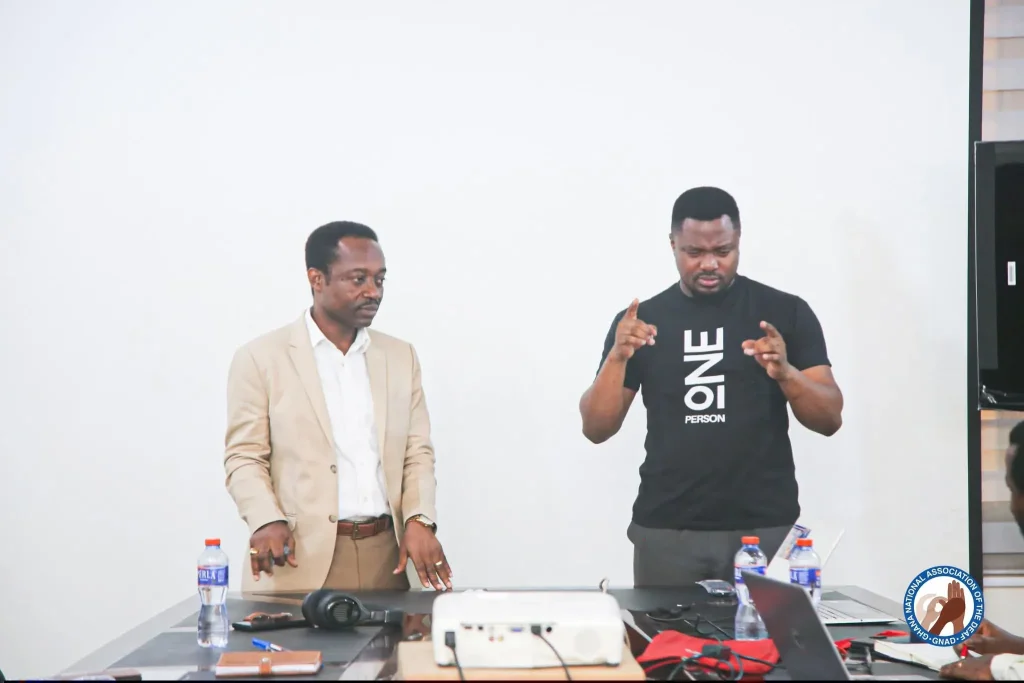
This initiative is the culmination of years of effort, building on lessons learned from past challenges. The latest step was a pivotal Stakeholders’ Meeting on February 26, 2026, held at the GNAD Conference Hall.
The meeting brought together GNAD, the Association of Sign Language Interpreters, Ghana (NASLIG), and the National Council on Persons with Disability (NCPD).
Mr. Juventus Duorinaah, Director of GNAD, detailed the historical context, acknowledging the significant strides made by the Ghanaian Deaf community.
He highlighted the growing number of Deaf professionals, including PhD holders, lawyers, university lecturers, and engineers.
This progress, he noted, is largely attributable to the intervention of qualified sign language facilitators. However, Mr. Duorinaah warned that this advancement is now threatened by an inadequate pool of competent interpreters.
He revealed that a previous specialised training programme at the University of Cape Coast, initially supported by the Danish Deaf Association (DDL), had faced significant financial hurdles.
After three successful sessions, the programme’s student body was drastically reduced due to a lack of full scholarships, leaving many aspiring, fluent interpreters unable to afford tuition.
“The relatively small number of sign language facilitators in the system cannot match the growing demands out there,” Mr. Duorinaah stated, noting that “many Deaf students are knocking at the doors of our tertiary institutions for admission, but are having to bide their time. As the queue grows longer and winding, the interpreter space has been infiltrated by novices and pretenders.”
Adding to this urgency, Mr. Francis Agbenya, Chairman of the Ghanaian Sign Language Assessment and Certification Committee, emphasised the dire consequences of unregulated practice.
He highlighted that unqualified interpreters are now “having a field day” in crucial sectors such as primary healthcare, legal services, governance, and entertainment.
“The system is now fraught with challenges as fraudsters, charlatans are having a free-for-all ‘enterprise’ and are causing untold harm to the Deaf and hearing clientele,” Mr. Agbenya stressed.
He lamented that without mandatory licensing, victims have “no recourse to any remedies.”
“Disturbingly, some of these impostors include individuals with connections to the Deaf community – such as Children of Deaf Adults (CODAs), teachers, and church workers – whose “unethical behaviour and unbridled desires for financial gains have placed victims in very disadvantaged situations, causing them to become more vulnerable and exploited, and even abused”, he added.
The new assessment and certification programme, building on further discussions among major stakeholders in 2023, aims to rectify these systemic issues.
Qualified interpreters will now need to pass a rigorous exam to earn the Ghanaian Sign Language Interpreters Certificate.
This certification will provide verifiable proof of minimum qualifications, essential knowledge, skills, and a commitment to ethical service, ensuring that holders can be “trusted to deliver with the competence and skills required of professionals.”
Mr. Richard Doku, the Sign Language Project Officer, underscored the critical role of the National Council on Persons with Disabilities (NCPD) in this effort.
He noted that the meeting represented a “vital first opportunity to engage directly with the NCPD since the inception of the Disability Act,” a crucial step given previous efforts had missed key stakeholders.
“GNAD recognises the statutory mandate of the NCPD as the state agency responsible for promoting disability inclusion and coordination,” Mr. Doku explained.
He stressed that collaboration with the NCPD will ensure that Sign Language Interpreter (SLI) assessment guidelines are incorporated into national disability policies and programmes, integrating SLI assessment into broader health, education, and social welfare systems for a unified national approach.
Mr. Musah Seidu, Programme Manager for GNAD, further affirmed the expectation that the NCPD will ensure the national assessment aligns strictly with existing disability laws.
It is expected that this partnership would significantly raise public awareness about sign language interpreters, their roles, and identification, fostering better engagement strategies and increased public understanding and acceptance of individuals with communication difficulties.
With the modalities now completed, GNAD and its partners are firm in their commitment to roll out the certification programme in August 2026.
This initiative marks a pivotal moment for professionalising the sign language interpreting field in Ghana, ensuring quality communication access and upholding the rights and dignity of the Deaf community.
SOURCE: DisabilityNewsGH.com