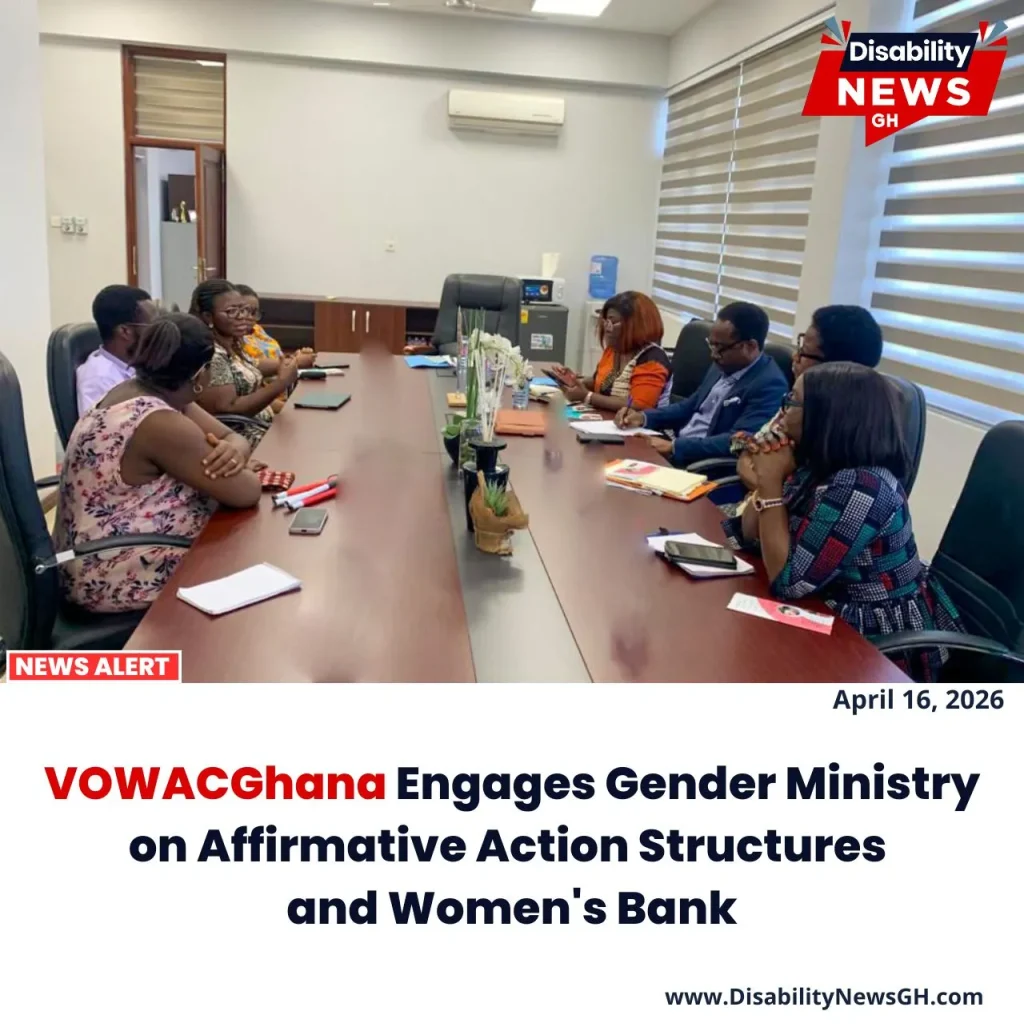
The Voices of Women and Children with Disabilities in Ghana (VOWACGhana) has called on the Ministry of Gender, Children and Social Protection to ensure that women with disabilities are not sidelined in the implementation of the Affirmative Action (Gender Equality) Act and the upcoming Women’s Development Bank.
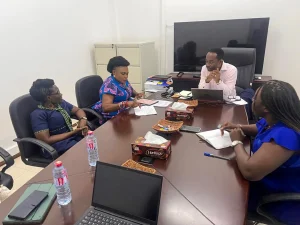
During a strategic engagement with the Ministry, VOWACGhana’s Technical Advisor, Madam Beatrice Akua Mahmood, raised concerns regarding the lack of clarity on the inauguration of the Affirmative Action Steering Committee.
She noted that currently, women with disabilities are visibly missing from key leadership positions and committees tasked with driving the gender agenda.
“We are requesting that minority groupings, specifically women with disabilities, be formally constituted within the Affirmative Action structures,” Madam Mahmood stated.
She further urged the Ministry to ensure that the Legislative Instrument (LI) for the Act includes specific indicators to ensure the 30% representation target is inclusive of women with disabilities.
Citing data from the Ghana Statistical Service, Beatrice Mahmood highlighted the dire economic situation of women with disabilities, many of whom are trapped in insecure, low-income informal sector jobs.
She argued that the proposed Women’s Development Bank must have a clear framework for including women with disabilities as key beneficiaries.
VOWACGhana also pressed the Ministry to fast-track the ratification of the African Disability Protocol and recommended merging the Global Disability Summit recommendations with the UN Convention on the Rights of Persons with Disabilities (CRPD) to strengthen inclusive education and empowerment programmes.
The engagement took an emotional turn when Patience Attipoka Attuah, Programmes Manager of VOWACGhana and a woman with a physical disability, shared her personal journey as a mother of three.
Her story highlighted the systemic stigma women with disabilities face in the healthcare system, particularly during maternal care.
“Stigma and the lack of sensitivity among health workers remain major hurdles,” she revealed.
Ms. Attuah also pointed to the physical barriers that hinder justice for survivors of Gender-Based Violence (GBV).
“Inaccessible police stations make it nearly impossible for women with disabilities to report abuse, and for those who do, the cost of gathering evidence is often beyond their reach,” she said.
She further noted that inaccessible washrooms and school infrastructure continue to deter girls with disabilities from pursuing their education, though she commended the Ministry for its swift response in recent cases of child and sexual abuse.
Responding to these concerns, a representative from the Social Protection Directorate assured the delegation that the Ministry is intentional about its disability-inclusive mandate.
The Ministry highlighted that persons with disabilities are currently prioritised under the Livelihood Empowerment Against Poverty (LEAP) programme, using household vulnerability as a key metric.
The Directorate emphasised that Article 2D of the Social Protection framework explicitly mandates that all programmes be gender-, child-, and disability-responsive.
The meeting concluded with a commitment from the Ministry to continue viewing disability groups as active partners rather than passive beneficiaries in the rollout of national social protection and gender equality initiatives.
SOURCE: DisabilityNewsGH.com