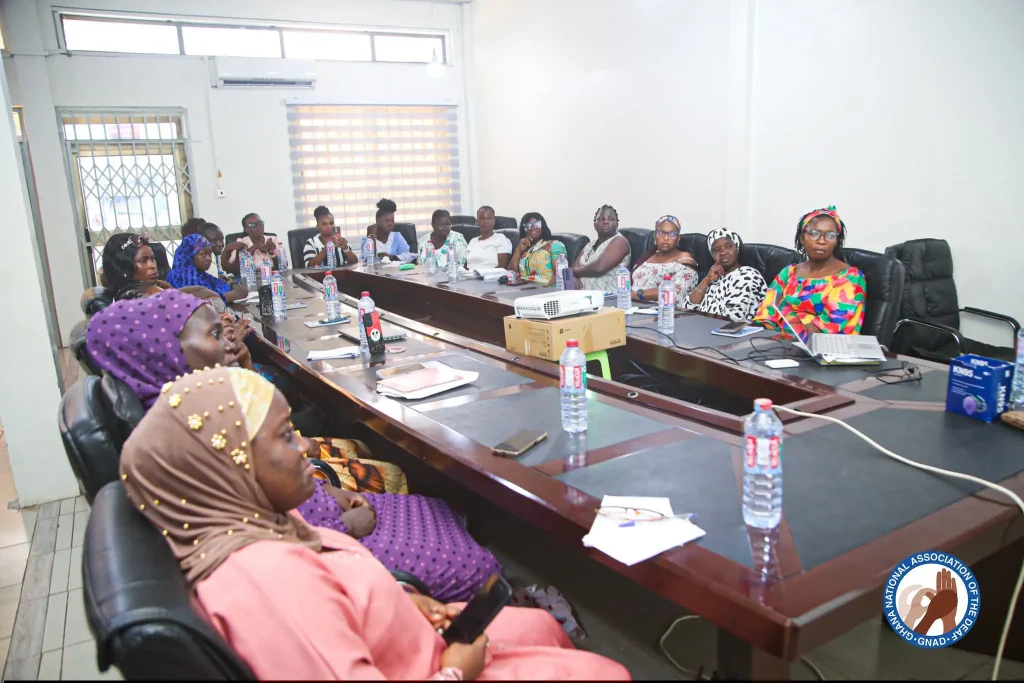
The Ghana National Association of the Deaf (GNAD) has taken a major step toward inclusive governance by equipping 20 Deaf women leaders with the legal expertise needed to advocate for the African Disability Protocol (ADP).
The specialised training brought together women leaders from the Central, Ashanti, and Northern Regions, alongside the National Women’s Wing, to transform the ADP from a legal document into a practical tool for social change.
The African Disability Protocol is a landmark framework adopted by the African Union. While similar to the UN Convention on the Rights of Persons with Disabilities (UNCRPD), the ADP is unique because it addresses specific African challenges, including harmful traditional practices, armed conflict, and the distinct rights of women, children, and the elderly.
During the sessions, participants delved into critical sections of the Protocol, with a heavy emphasis on Article 7, which affirms the right to sign language access and information in accessible formats.
Other areas of focus included Article 14 (Rights of Women), Article 19 (Inclusive Education), and Article 26 (Right to Work).
The training also highlighted Article 31, which focuses on data collection. Advocates argued that without accurate, disability-disaggregated data, effective policy-making remains impossible.
A key highlight was the screening of a global dialogue hosted by Sightsavers and the Africa Disability Alliance.
The video sparked discussions on the role of regional bodies like ECOWAS in pushing for the ratification of the Protocol.
With 16 ratifications achieved across the continent so far, the participants emphasised the need for a united front among Organisations of Persons with Disabilities (OPDs) to lobby for full domestication in Ghana.
By empowering these women, GNAD is building a resilient network of advocates ready to challenge systemic barriers and ensure that the legal protections on paper become a lived reality for the Deaf community across Africa.
SOURCE: DisabilityNewsGH.com