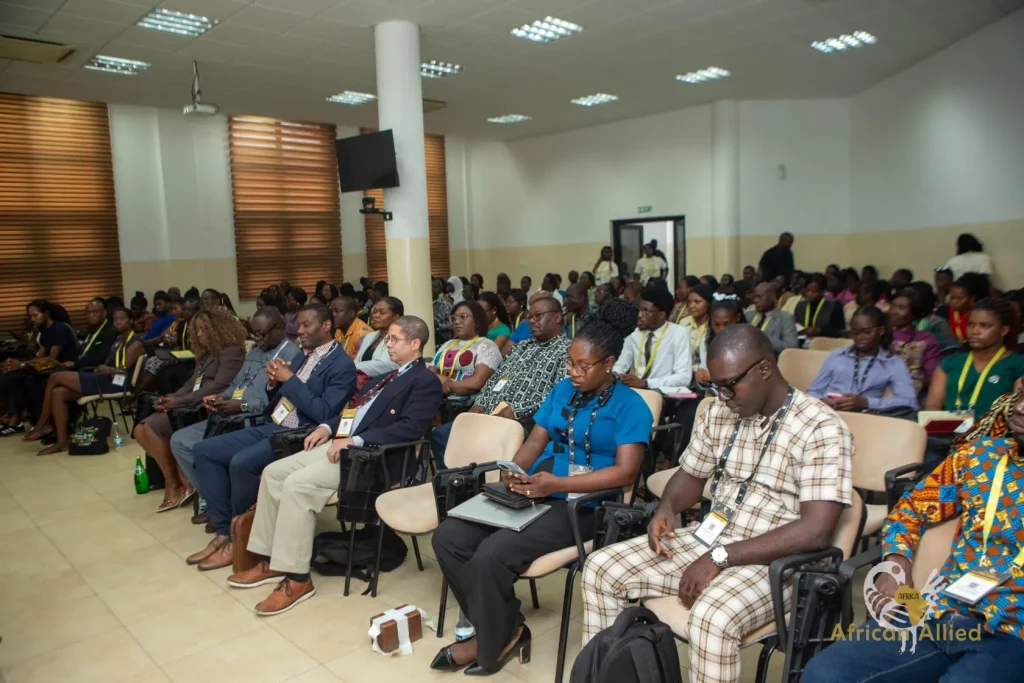
The maiden African Allied Healthcare Summit, convened by the African Allied Healthcare Network and powered by the Alexis Miranda Foundation, has served as a crucial platform for addressing some of Africa’s most pressing healthcare disparities.
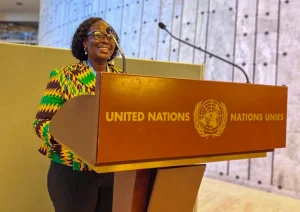
One of the standout presentations came from Rehabilitation and Sports Physician Dr Abena Tannor, who called for rehabilitation services in Ghana to extend beyond hospitals into rural communities, schools, and workplaces.
Delivering a presentation titled “Rehabilitation Beyond the Clinic,” Dr. Tannor highlighted that confining services to tertiary facilities deprives millions of Ghanaians – especially those in underserved rural areas of the support needed to thrive independently.
According to data from the World Health Organization (WHO), an estimated 2.6 billion people globally live with health conditions or functional impairments that could benefit from rehabilitation. However, in countries like Ghana, accessing these critical services remains a steep uphill battle.
The Urban-Rural Disparity
While Ghana possesses skilled specialists – including rehabilitation doctors, physiotherapists, occupational therapists, speech and language therapists, prosthetists, psychologists, and special needs educators – their distribution remains severely skewed toward major cities.
“We do have some of these professionals in Ghana, but we don’t have enough – and the vast majority are concentrated in urban centers,” Dr. Tannor revealed. “That means a child with autism or cerebral palsy, or an adult recovering from a stroke in a rural community, often has zero access to a rehabilitation professional.”
Task-Sharing: Empowering Primary Healthcare Workers
To close this gap without waiting decades to train full cohorts of specialists, Dr Tannor advocated for task-sharing across the health delivery chain, starting from Community-Based Health Planning and Services (CHPS) compounds up to district hospitals.
“If we don’t have the immediate capacity to post specialised rehab personnel everywhere, we can train our existing primary healthcare workforce,” she explained. “Community health nurses, physician assistants, and doctors in rural health centers can be equipped to screen, identify functional impairments, and offer basic rehabilitation, while referring complex cases to tertiary centers.”
Classroom Inclusion: “Stop Labeling Children as ‘Dumb'”
Dr. Tannor extended her advocacy to the education sector, warning that a lack of early detection in classrooms is ruinous for children with invisible disabilities or learning difficulties.
She urged the Ministry of Education and the Ghana Education Service to equip mainstream teachers to identify early signs of learning challenges rather than dismissing struggling pupils.
“A child isn’t ‘dumb’ – they may simply have special learning needs,” Dr. Tannor stressed. “If mainstream teachers are trained to identify these challenges early, they can collaborate with district special needs coordinators to secure appropriate assessments and classroom accommodations so the child can thrive.”
She further called on corporate and institutional leaders to build inclusive workplace environments, allocate funding for accessibility, and actively recruit qualified persons with disabilities.
Policy Implementation and Universal Health Coverage
Highlighting that rehabilitation is an essential pillar of Universal Health Coverage (UHC), Dr Tannor challenged policymakers and health administrators to turn existing legal frameworks into actionable budget allocations.
“In Ghana and across Africa, we have good policies on paper. What we need now is implementation,” she declared. “Health institutions must explicitly budget for rehabilitation services so that everyone – regardless of where they live or their socioeconomic status – can function at their highest potential.”
SOURCE: DisabilityNewsGH.com