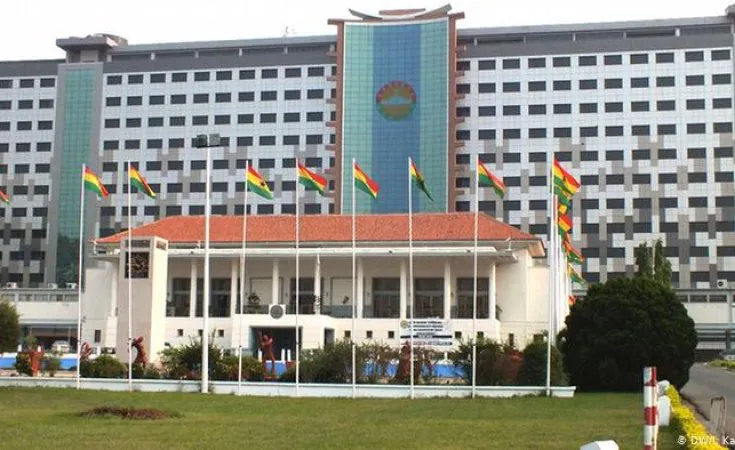
The Parliamentary Caucus on Disability has announced plans to introduce a national “League Table” to publicly expose, shame, and sanction state institutions, courts, and security agencies that fail to comply with national accessibility laws and disability rights mandates.
Speaking in an interview with DisabilityNewsGH.com at the conclusion of a two-day parliamentary oversight workshop in Accra, the Caucus Chairman, Hon. Dr Clement Apaak, expressed outrage over the abysmal level of compliance twenty years after the passage of the Persons with Disabilities Act, 2006 (Act 715).
Dr Apaak noted that two decades after the expiration of the ten-year moratorium granted to make public buildings accessible, major state infrastructure – including police stations, courtrooms, and even Parliament itself – remains largely inaccessible to PWDs.
“After almost 20 years, this is completely unacceptable,” Dr Apaak stated. “We are going to be very crude in holding people accountable. We will start identifying, exposing, and publicly shaming institutions that are not working to protect and defend the rights of persons with disabilities.”
To enforce compliance, the Caucus will roll out an annual performance ranking system:
• Public Shaming: Institutions that ignore accessibility guidelines or abuse PWDs will be named, shamed, and summoned before Parliamentary committees.
• Public Commendation & Rewards: Institutions that proactively create accessible environments and inclusive opportunities will be publicly commended and rewarded.
Dr Apaak also directed a strong warning to law enforcement agencies regarding their negative attitudes toward PWDs, revealing that security training academies will be forced to restructure their curricula.
“The situation where law enforcement agents are abusing persons with disabilities instead of protecting them must be a thing of the past,” he warned. “Security and law enforcement agencies must be properly oriented. They must understand that they are obligated by law to uphold the rights of persons with disabilities in all situations.”
Dr Apaak emphasised that accessibility is not a public charity, but a constitutional right enshrined in domestic laws and international conventions signed by Ghana.
SOURCE: DisabilityNewsGH.com


This is a much-needed step in the right direction. As someone living with scoliosis, I know firsthand how inaccessible many institutions in Ghana still are.
There were times I had to be carried up flights of stairs just to access an office or faculty on the upper floors because there were no disability routes or working elevators. On campus, I relied on an electric scooter just to get to my classes, many of which were on the top floors. My choice of university was also limited because many schools simply weren’t accessible.
And it’s not just schools. Many banks, public institutions, and private buildings still have no ramps, lifts, or other disability-friendly access. Ghana acts like accessibility is a luxury, but it’s a basic right. Indirectly, they imply that persons with disabilities are not prioritized or considered as equal as folks with regular working body parts. I hope this marks the beginning of real change so that no one is excluded simply because of the way a building was designed. Thank you.