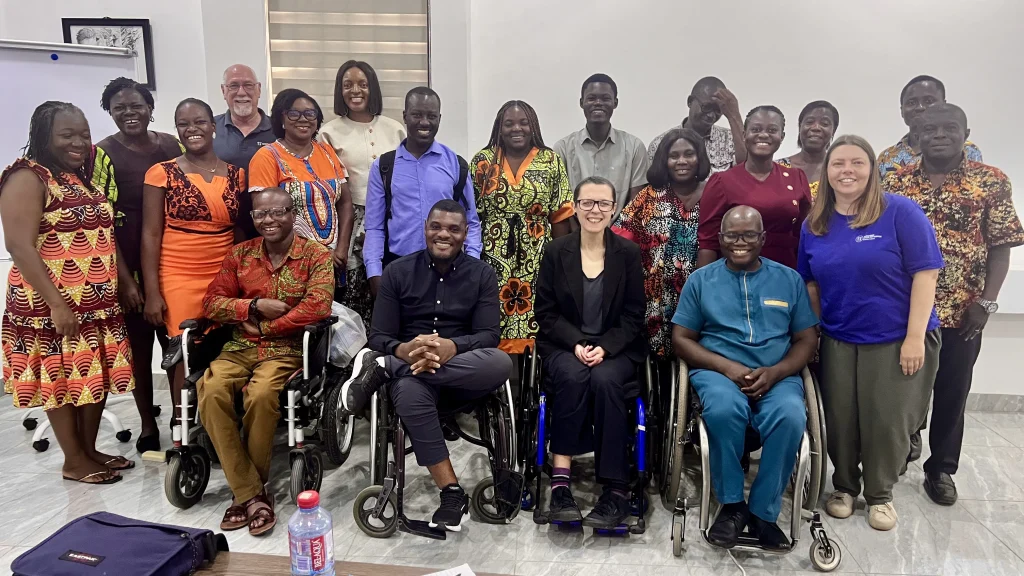
Disability rights advocates and practitioners have described the government’s recent promise to distribute free motorised wheelchairs as a “misplaced priority” that fails to address the structural barriers facing persons with disabilities in Ghana.
During a knowledge-sharing workshop on Assistive Technology (AT) held at the University of Ghana on February 26, 2026, participants raised serious concerns regarding an announcement made late last year by President John Dramani Mahama.
The President had pledged free motorised wheelchairs during the launch of the government’s Free Tertiary Education for Persons with Disabilities policy.
Even though till now, nothing has been heard about the implementation or progress of the initiative, participants at the event questioned how the distribution of such devices would solve the AT challenges of persons with disabilities in the country.
The defects of the policy, according to them include:
1. Narrow Scope: The policy mistakenly assumes that persons with disabilities are only those with mobility challenges, neglecting those with sensory, intellectual, or hidden disabilities.
2. Infrastructure Mismatch: Motorised wheelchairs require accessible terrain. Participants noted these expensive devices would become “useless or of little use” in an environment where Ghanaian roads and public infrastructure remain largely hostile and inaccessible.
3. Transport Over Hardware: Advocates stated they would prefer an improved, inclusive public transportation system with buses accessible to all disability types, rather than individual motorised units that cannot navigate the streets.
4. The Assessment Crisis: There is a critical lack of institutional support for prescribing technology. Participants highlighted that the entire country has only one functional assessment centre, located in Achimota, Accra. This facility is reportedly under-equipped, forcing many to pay exorbitant fees at private centers.
The critique at the University of Ghana workshop centred on the need for systemic change rather than “headline-grabbing” donations.
Participants urged the government to prioritise the decentralisation and equipping of assessment centres so that assistive technology can be properly matched to an individual’s specific needs.
By focusing on accessible public transport and the enforcement of the Disability Act (Act 715) regarding the physical environment, stakeholders argue the government would achieve a far more sustainable and “life-changing” impact than through the distribution of motorised wheelchairs that the current Ghanaian infrastructure cannot support.
SOURCE: DisabilityNewsGH.com