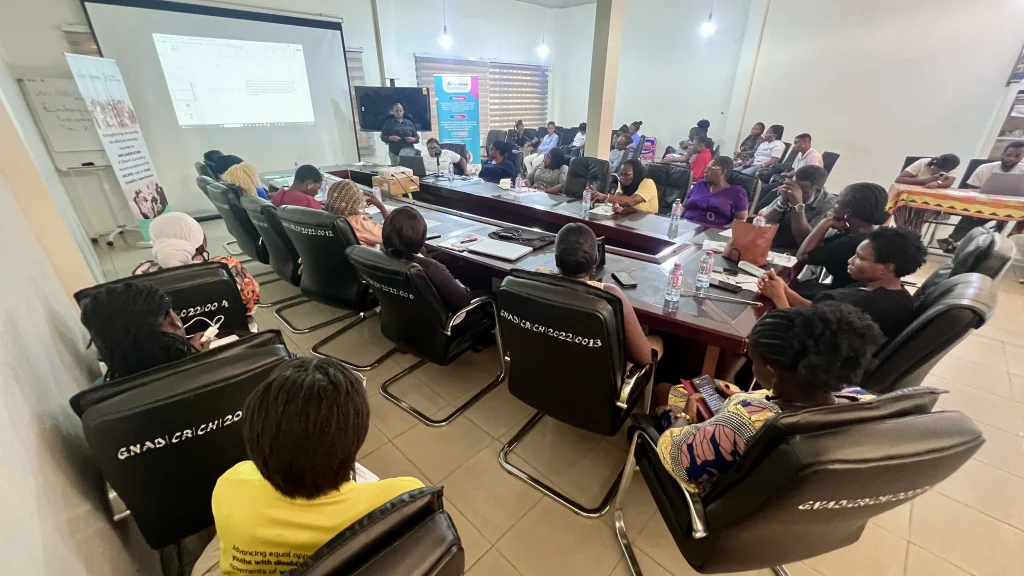
The Voices of Women and Children with Disabilities in Ghana (VOWACGhana) has launched a strategic 12-month advocacy drive aimed at bridging the gap between Ghana’s international promises and the lived realities of women and girls with disabilities.
At a high-level capacity-building workshop held on Friday, February 27, 2026, at the Accra Rehabilitation Centre, the organisation empowered the first cohort of 30 women with disabilities – including leaders of advocacy organisations and individual advocates, to spearhead a grassroots movement for the full implementation of the United Nations Convention on the Rights of Persons with Disabilities (UNCRPD).
To ensure the advocates are equipped for the complexities of modern human rights work, the workshop featured an intensive curriculum centered on both international frameworks and practical grassroots mobilisation.
Participants were educated on: • The UNCRPD Concluding Recommendations (2024): Specifically focusing on Articles 6, 25, and 28.
• The 2025 Global Disability Summit (GDS) Commitments: Highlighting Ghana’s specific pledges on Affirmative Action, Gender Inclusion, and Inclusive Health.
• The Pillars of Effective Advocacy: This included an introduction to advocacy, the core elements of impactful campaigning, and the practical steps required to move from identifying a problem to securing a policy solution.
The training emphasised why advocacy matters specifically for women and children with disabilities, who often face a “double burden” of discrimination.
Closing the Implementation Gap
While Ghana has signed significant international treaties, VOWACGhana notes that implementation at the district and community levels remains alarmingly weak.
Women and girls with disabilities continue to face systemic exclusion from healthcare, employment, and decision-making processes – barriers often exacerbated by structural gender inequality and inaccessible public infrastructure.
The project specifically targets the implementation of Articles 6 (Women with Disabilities), 25 (Health), and 28 (Adequate Standard of Living and Social Protection) of the UNCRPD.
These align with Ghana’s GDS 2025 commitments on Inclusive Employment, Livelihood, and Social Protection.
“There is an urgent need to strengthen grassroots advocacy and institutional movement-building,” the organisation stated. “We are empowering these women to move beyond being passive beneficiaries to becoming active duty-bearers who demand accountability for the commitments Ghana has made on the global stage.”
A Roadmap for Accountability
The training in Accra is part of a broader intervention spanning the Greater Accra and Western Regions (Accra and Takoradi).
The initiative seeks to achieve three primary outcomes:
1. Active Implementation: Ensuring that government officials and duty-bearers execute the GDS and UNCRPD recommendations.
2. Institutional Strengthening: Building the capacity of 25 staff and governance leaders in strategic partnerships.
3. Grassroots Mobilisation: Equipping 60 women with disabilities in total with the technical knowledge to engage local government authorities.
As the 12-month project progresses, VOWACGhana remains committed to ensuring that the concluding observations issued to Ghana by the UN Committee on the CRPD do not remain on paper, but translate into dignity, livelihood, and equal opportunity for every woman and child with a disability in the country.
The project is funded by Disability Rights Fund (DRF)
SOURCE: DisabilityNewsGH.com