A detailed statutory review released by organisations of persons with disability (OPDs) has exposed the systemic failures of Ghana’s Persons with Disabilities Act, 2006 (Act 715), highlighting how weak penalties and ignored deadlines have created a widespread culture of non-compliance among public and private institutions.
The review was presented during a press briefing in Accra, where advocates argued that twenty years after the passage of Act 715, the lived realities of persons with disabilities (PWDs) continue to contradict the promises of the law.
The coalition pointed to several key sections of Act 715 that have remained completely unenforced since 2006:
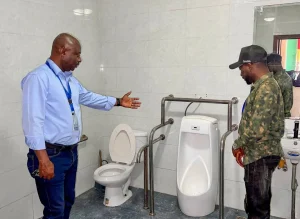
• The Accessibility Failure (Section 60): Under Section 60, all public buildings in Ghana were given a mandatory ten-year grace period to be made fully accessible to PWDs.
This statutory deadline expired in 2016. Ten years after the deadline, compliance across public structures, academic institutions, and commercial buildings remains low.
• Inadequate Penalties: Under the current Act, the standard penalty for discriminating against a person with a disability or violating key provisions of the law is a fine not exceeding fifty penalty units, or a maximum of three months’ imprisonment.
Advocates argue these minor sanctions have failed to deter violators, effectively encouraging institutional non-compliance.
• Failed Educational Provisions (Section 17): The Act mandated the Ministry of Education to designate accessible schools equipped with necessary facilities for PWDs in every region. Advocates report this has not been systematically implemented, leaving inclusive education fragmented.
• Deficient Transport Systems (Section 23): The law required transport network designs to incorporate the needs of PWDs. To date, public transport systems and physical roads remain largely inaccessible.
“The current Act, while well-intentioned, has proven inadequate and ineffective due to weak enforcement mechanisms, minimal penalties, and the absence of clear accountability provisions,” the coalition stated.
Advocates emphasise that these persistent barriers are not the result of any physical or intellectual limitations of PWDs themselves. Instead, they represent a systemic failure of national institutions to enforce compliance.
The OPDs are urging the government to replace Act 715 with the revised 2026 Bill, which introduces strict, enforceable standards for the built environment, transportation, and digital communication, alongside robust accountability frameworks and severe legal penalties for non-compliance.
SOURCE: DisabilityNewsGH.com