For many adolescent girls, learning about menstrual health usually starts at home. But for a deaf learner at the Cape Coast School for the Deaf and Blind, that conversation never happened.
“My parents cannot even communicate with me effectively because they cannot sign,” she shared during a focus group discussion. “How would they educate me on menstrual hygiene? I am happy you can sign with me and understand me better than my parents.”
This emotional testimony was one of several that highlighted a significant gap in health education for learners with disabilities during a visit to the school on Saturday, May 30.
The outreach was led by Ms. Gifty Akosua Adzigbey, a public health nurse and Mandela Fellow, alongside alumni from the University of Health and Allied Sciences (UHAS) and a visiting team from Gallaudet University in the United States.
Ms. Adzigbey, a disability inclusion advocate who is proficient in sign language, designed the session to be fully inclusive.

Unlike typical menstrual health campaigns that focus almost exclusively on the distribution of sanitary pads, this initiative brought a much-needed focus to the role of nutrition.
“Often, menstrual health education overlooks nutrition,” Ms. Adzigbey said. She noted that for many learners, a lack of independence makes healthy eating difficult.
She recalled a conversation with a visually impaired student who told her, “Auntie, please, because I cannot see, I do not have control over what to eat, so I only eat what I am served.”
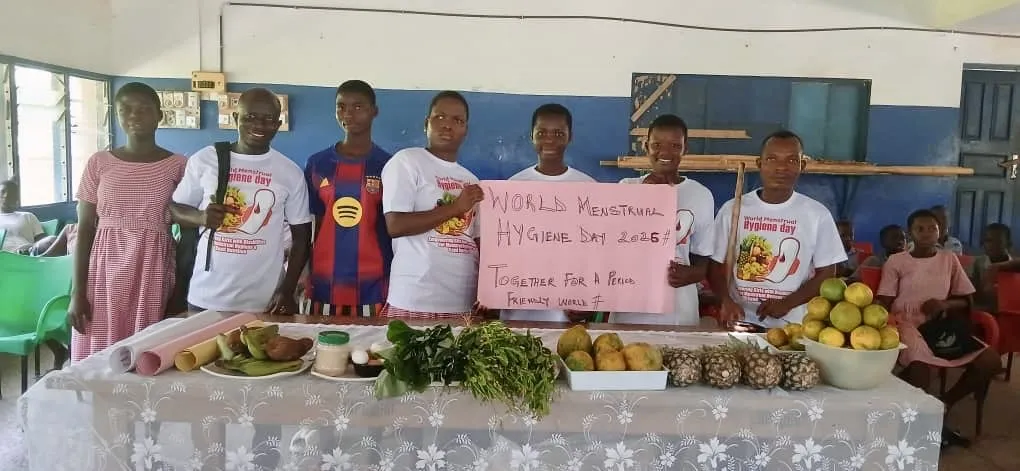
Struck by these challenges, Ms. Adzigbey emphasised a “four-star diet” using local, familiar foods. She taught the girls how staples like cassava, plantain, and rice, paired with proteins, fruits, and vegetables, provide the energy-giving and body-building nutrients needed to thrive during and after their cycles.
The session covered the full spectrum of adolescent health, reminding the girls that menstruation is a normal biological process and not a disability.
The team discussed the typical 28-day cycle, the importance of hydration, and personal hygiene to prevent infections.
Beyond modern products, the team also discussed safe alternatives. Ms. Adzigbey explained that clean, reusable cloths – similar to those used by previous generations – can be safe and effective options if they are cared for with strict hygiene standards.
The learners at the Cape Coast School for the Deaf and Blind were not just passive observers; they participated actively, asking questions through sign language and tactile communication.
The visiting professor from Gallaudet University, Gregoire Youbara, PhD, noted the students’ enthusiasm, urging them to take these health lessons seriously to support both their physical well-being and their education.
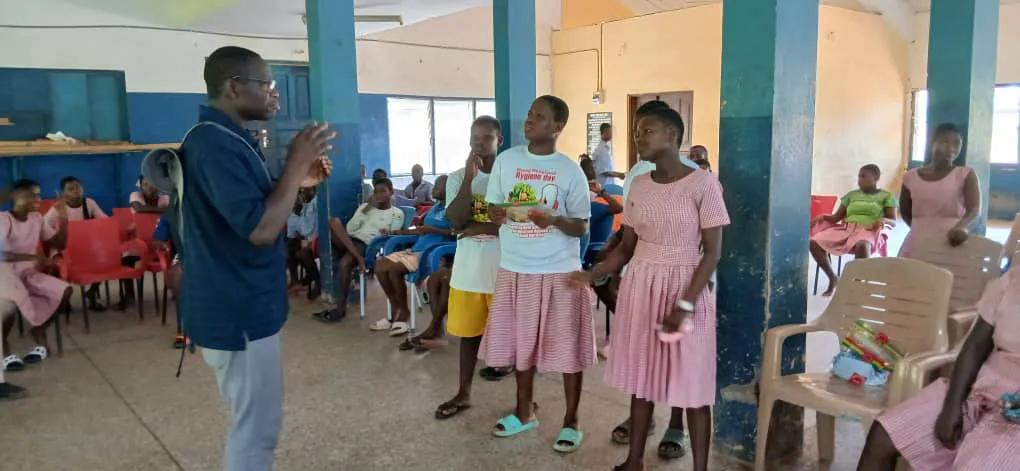
The day concluded with a donation of 70 packs of sanitary pads and fresh fruits for the students. For the organisers, the goal was to ensure that for these girls, a disability does not mean a lack of dignity, and that a period does not mean an end to their education.

SOURCE: DisabilityNewsGH.com