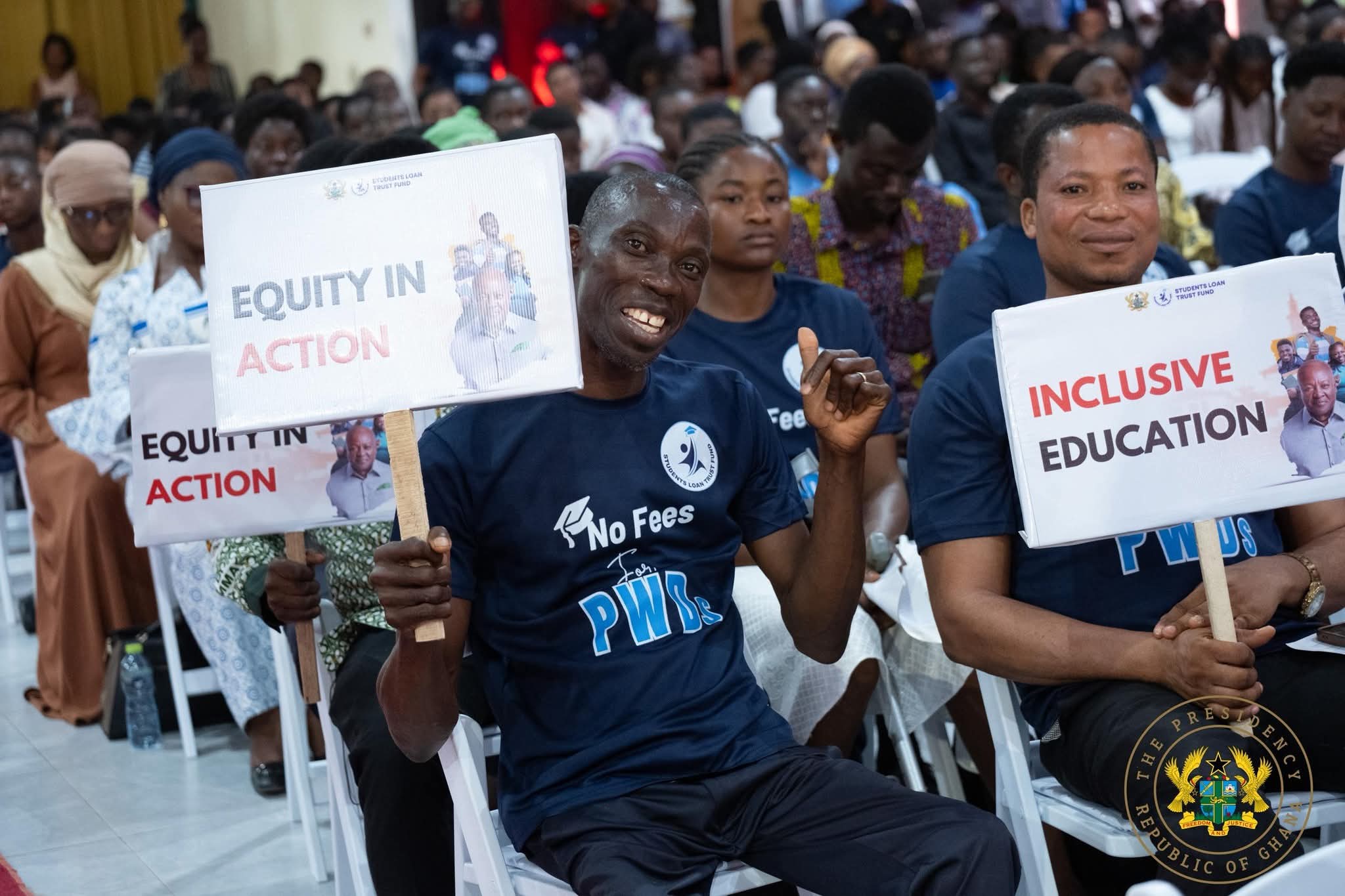
President John Dramani Mahama, on Monday October 24, 2025, launched a landmark Free Tertiary Education initiative for persons with disabilities (PWDs) in Ghana, fulfilling a key promise made during his 2024 general election campaign.
Speaking at the launch in Accra, President Mahama emphasised that the new policy is “not an act of charity, but an act of justice and equality,” representing a strategic investment in the nation’s most valuable resource: its people.
The initiative integrates existing scholarships, previously administered by the National Scholarship Authority, with a new universal disability scholarship under the Student Loan Fund.
President Mahama underscored the transformative potential, stating, “Each student supported under this policy becomes an asset to our nation – a potential engineer, a teacher, an entrepreneur, a farmer, or innovator. Their success will strengthen Ghana’s economy and enrich our collective humanity.”
To ensure that inclusion becomes a full reality, President Mahama outlined a comprehensive set of complementary actions his government will roll out:
Legislative Reforms: Significant legislative reform is planned, beginning with the introduction of a Disability Amendment Act and a Legislative Instrument (LI). This aims to modernise Ghana’s disability rights framework, bringing the Persons with Disability Act of 2006 up to date with current realities.
Health and Early Assistance: The government will establish a Disability Health and Resource Centre in each district. These centers will provide specialised health assessments and build a credible national health database for persons with disabilities to inform targeted interventions.
Rehabilitation and Empowerment: Efforts will be made to construct and upgrade rehabilitation centers in all regions, offering crucial support for physical recovery and vocational training for persons with disabilities.
Local Governance and Employment Quotas: Every Metropolitan, Municipal, and District Assembly will establish a dedicated Disability Desk. These desks will be tasked with integrating disability issues into local development planning.
Additionally, the government will enforce a minimum 5% employment quota for persons with disabilities across both public and private sectors. Private sector organisations meeting this quota will receive tax incentives, while public sector ministries will be required to report annually on their compliance.
Gender Empowerment: Dedicated programmes for women with disabilities will be rolled out, providing them with essential entrepreneurship skills and leadership training.
Accessibility and Infrastructure: Ghana’s accessibility standards will be rigorously enforced. President Mahama noted that 2026 marks 10 years since the deadline for enforcing accessibility in public buildings. The new amendment act to Act 715 will significantly increase both terms of imprisonment and fines for non-compliance, citing the current penalty of three months imprisonment or 600 cedis as “too small.”
Increased District Assembly Common Fund Allocation: Next year, the District Assembly Common Fund (DACF) formula will be revised to increase the allocation for persons with disabilities from 3% to 5%.
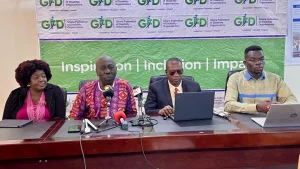
The newly established disability desks in each district, in consultation with local branches of the Ghana Federation of Disability Organisations (GFD), will prepare annual budgets for how this increased allocation will be spent.
Mobility Aids: In a significant announcement, the government intends to introduce a system for distributing rechargeable motor wheelchairs to aid transport for persons with disabilities.
President Mahama concluded by directing all municipalities to review their automation under the disability act and design action plans for full compliance within the shortest possible time.
He stressed that ministers would be obliged to provide annual reports on their compliance. He then called on the private sector, civil society, development partners, universities, and the media to join his government in this transformative journey towards full inclusion.
SOURCE: DisabilityNewsGH.com