Too often, disability is still framed as a matter of welfare or pity. People with disabilities are seen as recipients of aid rather than as citizens with rights, skills, and potential. This mindset is not only outdated — it is harmful. Disability inclusion is not an optional gesture. It is a measure of justice and a foundation for sustainable development.
The real question is what kind of development do we want? If our vision excludes persons with disabilities from education, employment, and decision-making, then it is neither inclusive nor sustainable. Development cannot be judged solely by GDP growth or infrastructure projects. It must also be measured by whether those on the margins — including millions of people with disabilities across Africa — can live with dignity, exercise their rights, and contribute to their communities.
Studies suggest that real progress happens when governments, civil society, and the private sector do not work in silos but instead collaborate meaningfully. The state has a duty to create inclusive policies and ensure resources reach those who need them.
Civil society organisations, including NGOs, serve as vital bridges, turning policies into lived realities and amplifying the voices of marginalised groups. The private sector, meanwhile, opens opportunities that neither governments nor NGOs alone can provide. Together, these actors can co-produce solutions that are sustainable, practical, and transformative.
Take, for example, a project in Western Uganda: Support for Vocational Training Schools for Persons with Disabilities and Raising Disability Awareness, a public–private partnership between the Korea International Cooperation Agency (KOICA) and the International Development Institute, Uganda.
This initiative works with vocational training schools to equip young people with disabilities with the skills to pass government-certified exams and enter the job market. Beyond classroom training, students are connected to local businesses through internship programmes, ensuring they gain hands-on experience and stronger prospects for employment.
The project also made history by becoming only the second initiative in Uganda’s human rights landscape to sign a Memorandum of Understanding with the National Council for Persons with Disabilities, deepening collaboration with a key national institution. With the government setting standards, NGOs bridging service gaps, and employers opening their doors, the model demonstrates how partnerships across sectors can transform inclusion from aspiration into action.
A similar approach can be seen in Ghana, where the Ghana Federation of Disability Organisations (GFD) has worked with the government and the private sector to expand employment opportunities for persons with disabilities. GFD organises career fairs and job-matching events that connect employers with qualified candidates, while also supporting individuals with CV preparation, interview training, and access to assistive technologies.
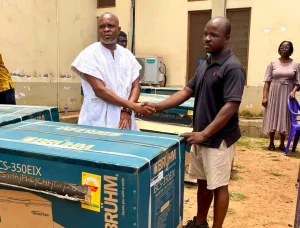
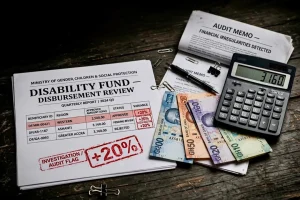
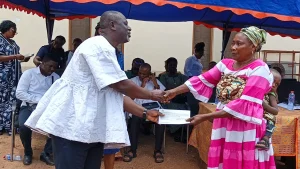
These efforts are complemented by the government’s Disability Common Fund, which provides start-up capital and equipment for small businesses run by persons with disabilities. Together, these initiatives show how government policy, NGO advocacy, and private-sector participation can combine to create tangible pathways to independence and economic contribution.
The logic is clear: A student with a disability who completes vocational training and secures employment is no longer viewed as a dependent but as a skilled professional. An employer who embraces disability inclusion discovers not a burden but an asset — a worker who often brings resilience, creativity, and problem-solving skills forged by navigating barriers. A government that integrates disability inclusion into national development strategies gains not only democratic legitimacy but also economic strength.
Yet challenges remain. Political resistance can slow reforms, as disability rights are too often considered secondary to “bigger” national issues. Many NGOs remain trapped in cycles of donor dependency, making long-term sustainability difficult. In some cases, businesses engage in token gestures rather than genuine inclusion, hiring a single person with a disability to “tick the box” while leaving broader systemic barriers untouched. These pitfalls should not discourage action. Instead, they remind us that inclusion must be systemic, not symbolic.
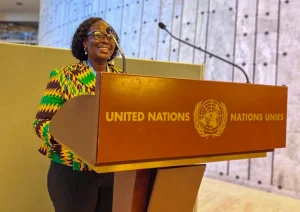
Human rights frameworks provide the foundation for this work. The United Nations Convention on the Rights of Persons with Disabilities (CRPD), ratified by most countries, makes clear that disability is not a matter of charity but of justice and equality. States have a legal obligation to remove barriers and guarantee equal participation. Civil society holds governments accountable to these commitments, while the private sector translates them into everyday practice.
What is equally strong is the development case. The World Health Organization and World Bank estimate that excluding persons with disabilities can cost economies up to 7% of GDP due to lost productivity and dependency. Conversely, inclusion generates a multiplier effect: more skilled workers, stronger businesses, and healthier communities. Simply put, no country can afford to waste the potential of such a large share of its population.
Therefore, the shift in mindset is urgent. Persons with disabilities are not asking for sympathy; they are demanding what is rightfully theirs: equal opportunity and equal dignity. Development actors — governments, NGOs, and businesses — must embrace this shared responsibility. The alternative is continued exclusion, dependency, and wasted potential. Consequently, disability inclusion must move beyond charity-based approaches and tokenistic gestures. It has to be embedded in laws, institutions, and everyday practices. The examples from Uganda and Ghana show what is possible when partnerships are built on shared responsibility. The task now is to scale these models so they become the norm rather than the exception. The choice before us is clear: embrace inclusion as a pillar of justice and sustainable development.
writer’s Bio:
Sinmyung Park is a Ph.D. candidate in Arizona State University (ASU)’s School of Social Transformation and a Global Human Rights Hub Fellow at ASU’s New College. He received his MSc in International Relations from the London School of Economics and Political Science (LSE) and his BA in International Studies from Kyung Hee University, Korea. He currently serves as the Project Manager for the KOICA-KFHI Partnership in Western Uganda, titled “Support for Vocational Training Schools for Persons with Disabilities and Raising Disability Awareness in Western Uganda.”
SOURCE: DisabilityNewsGH.com